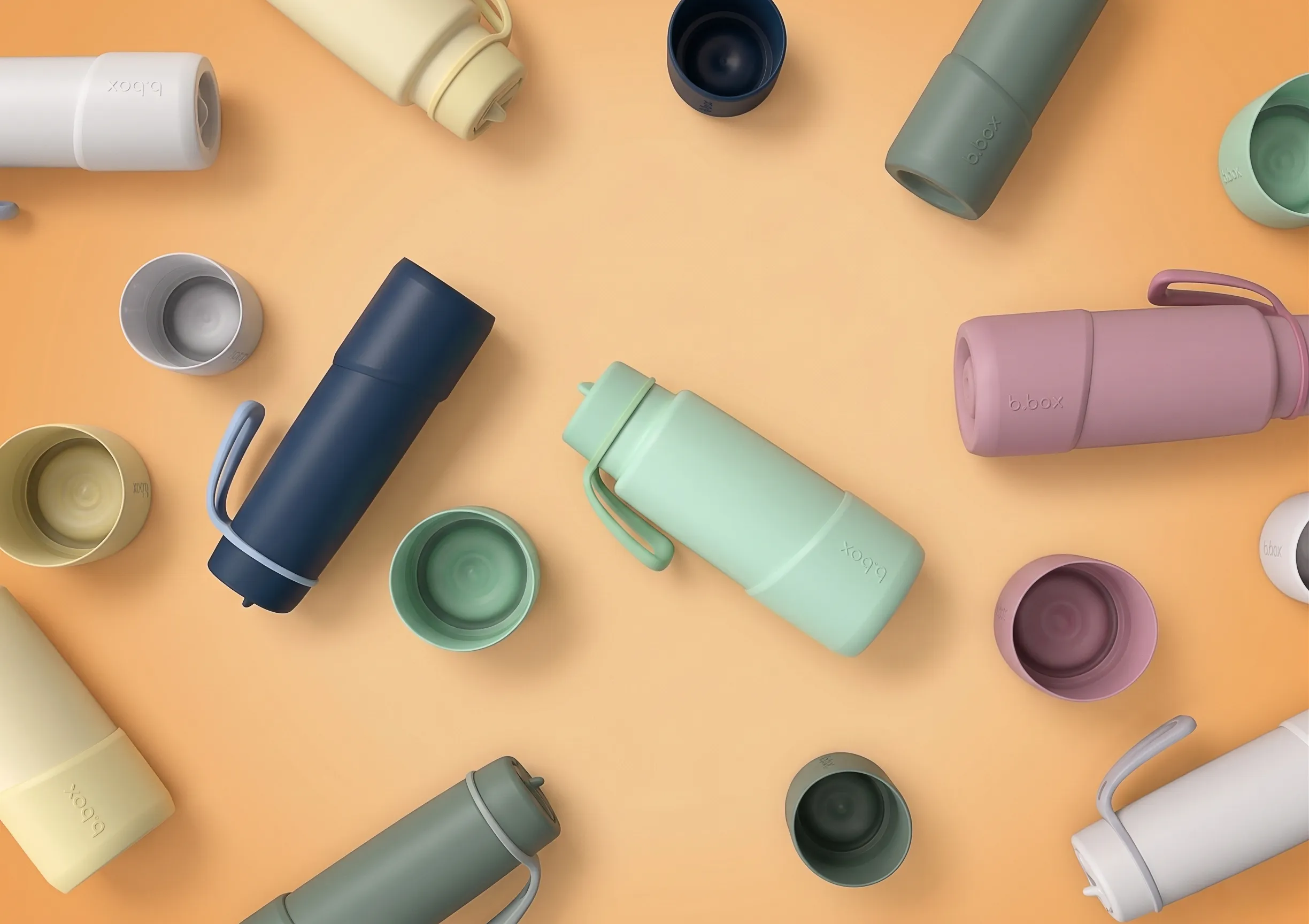
Bumper Sleeve
A protective sleeve engineered to protect b.box's drink bottles.
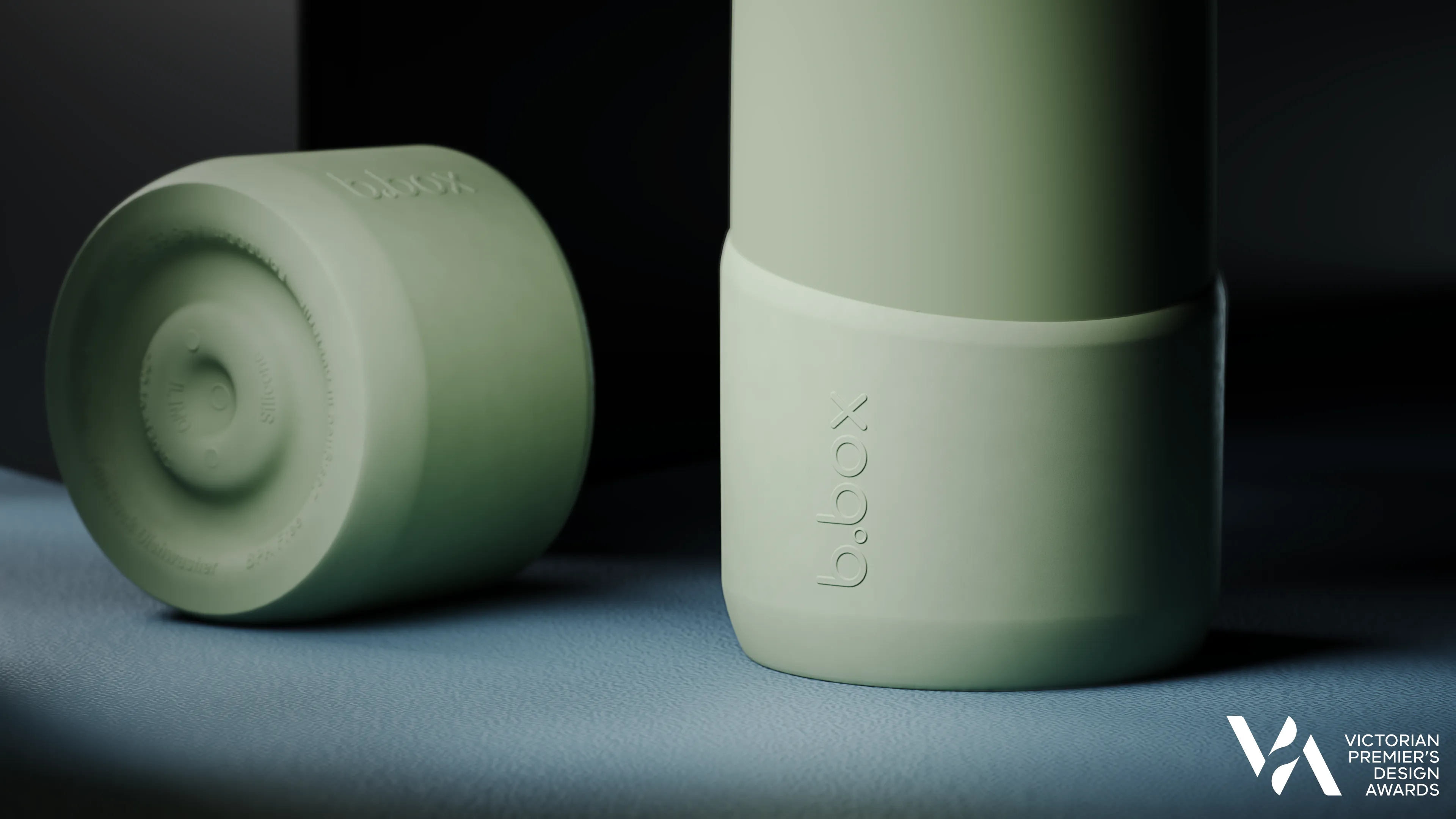
A small accessory with a serious job
I engineered the Bumper Sleeve to give b.box's insulated drink bottles serious drop protection without sacrificing their sleek, modern look. The challenge was balancing impact absorption and everyday durability without adding bulk to the bottle. I led the engineering and development of the shock-absorbing mechanism, developing the geometry through prototyping and drop testing before carrying the design through DFM and IP protection. The result was a granted utility patent and a shortlisting at the 2025 Victorian Premier's Design Awards.
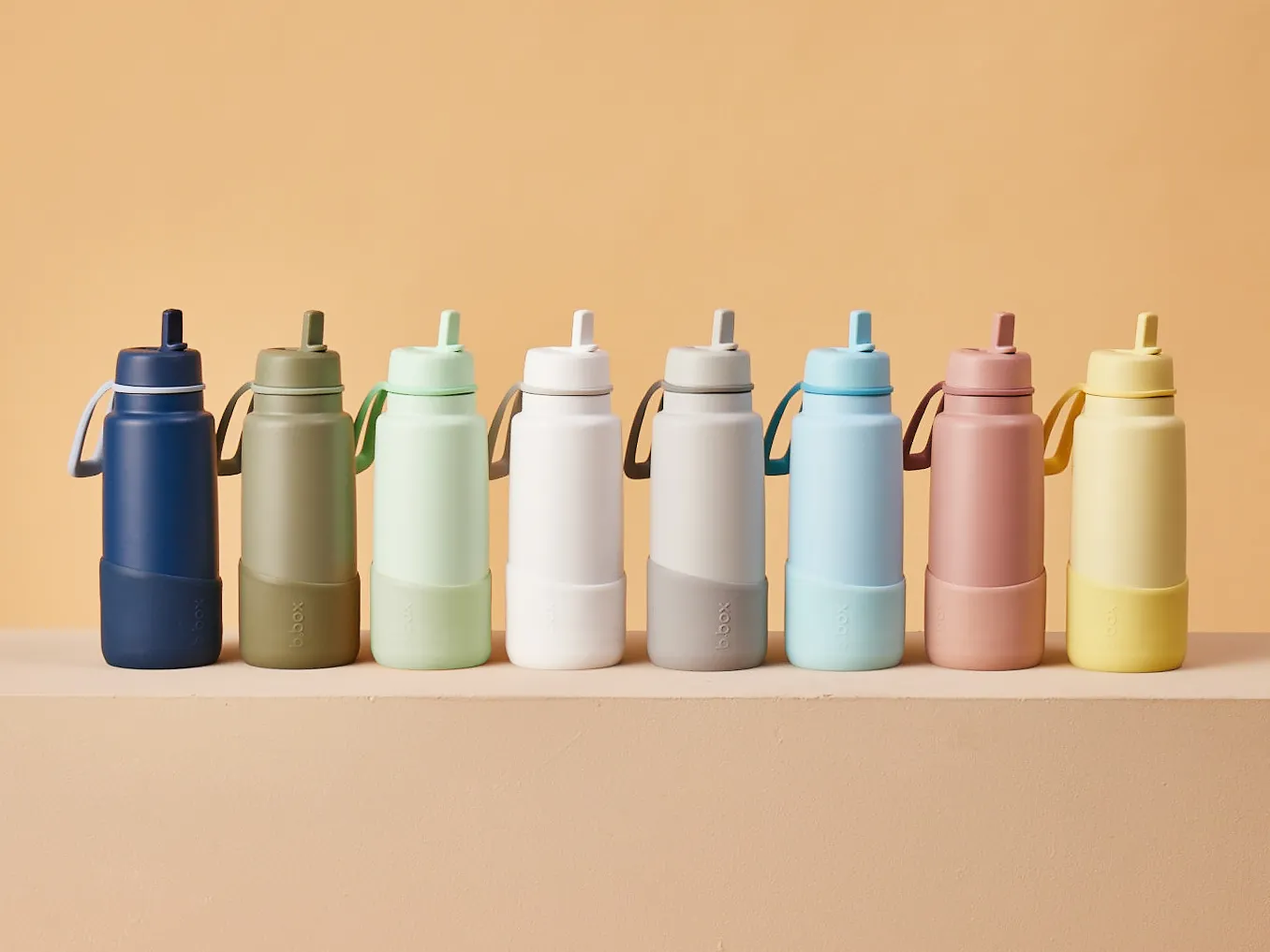
The Brief
Design a protective sleeve for b.box's insulated drink bottles that defends against dents, dings, scuffs, and everyday wear, without the bulky "pillow" look of typical bumpers, and without compromising the bottle's insulation.
- Protect bottles weighing up to 1.5kg when dropped from a height of 1m.
- Preserve the bottle's thermal performance, since dents undermine it.
- Fit the 1000ml insulated flip-top bottle range without adding significant bulk.
- Stay easy to clean, avoiding deep ribs or tight corners that trap grime
The Product
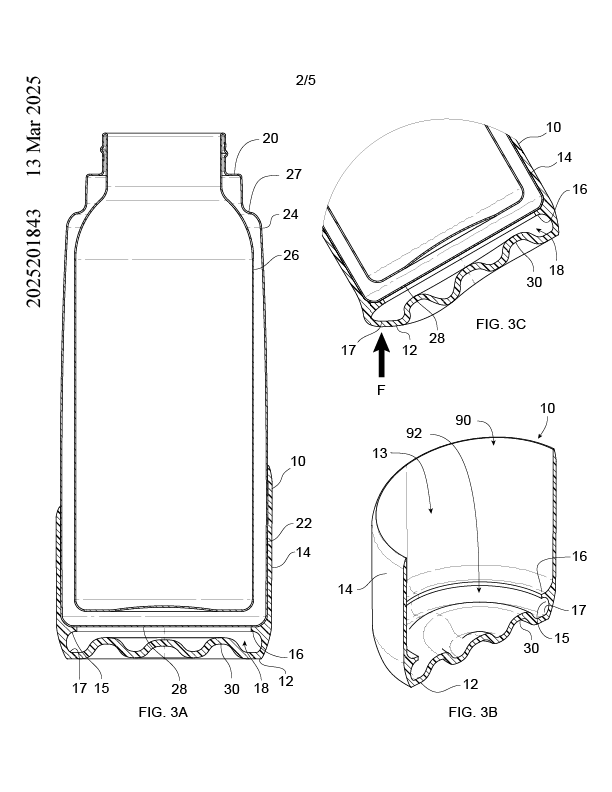
The solution centres on a mechanism I developed: an internal support ledge, spaced above the base of the sleeve, that the bottle rests on rather than sitting flush. That gap creates an enclosed air pocket beneath the bottle's base, which is the weakest point on impact, so instead of transmitting a drop's force straight through the sleeve into the bottle, the air pocket compresses and absorbs it. I paired that with a rippled, wave-like base geometry that flexes and redirects impact laterally, working with the air pocket rather than against it.
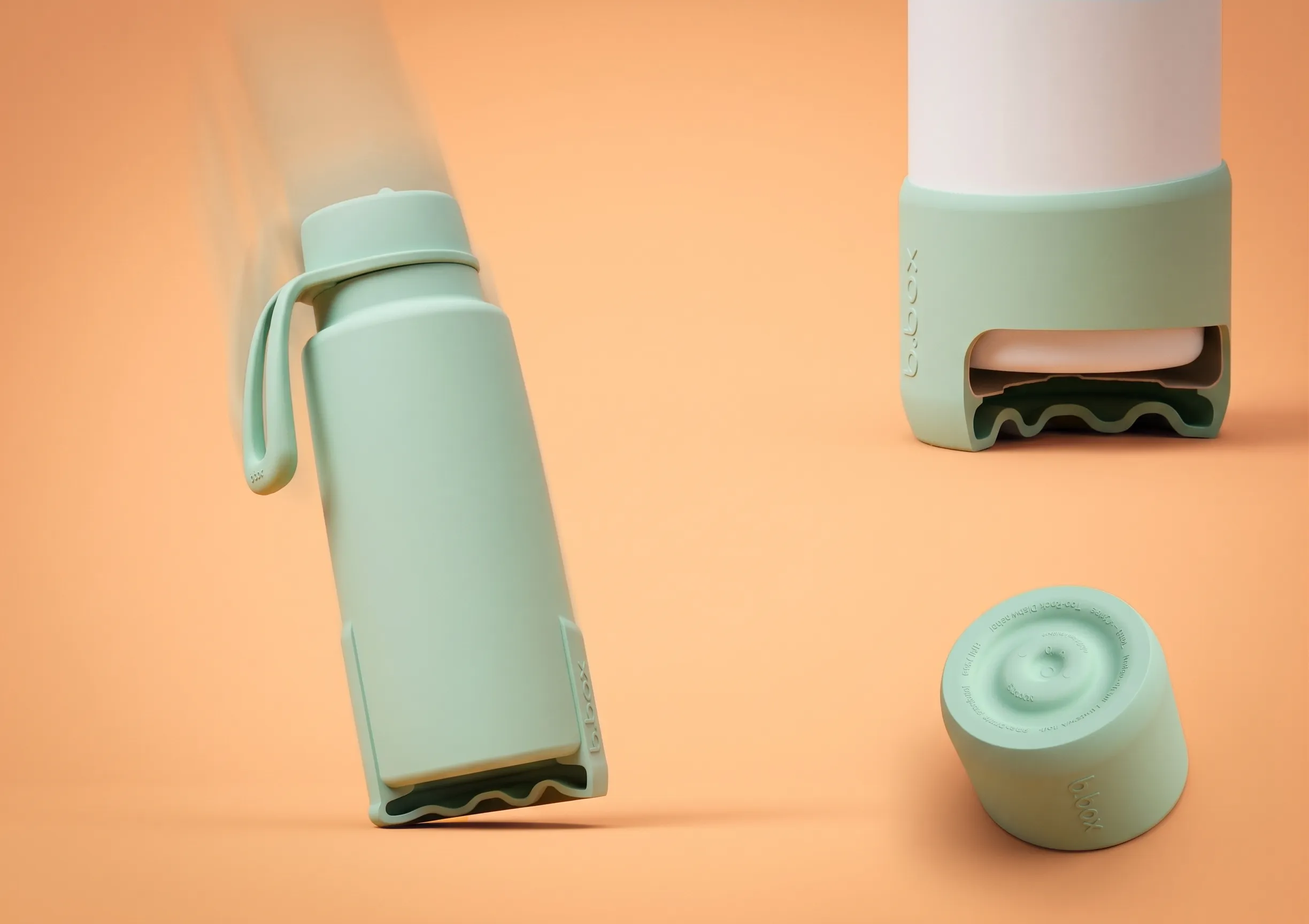
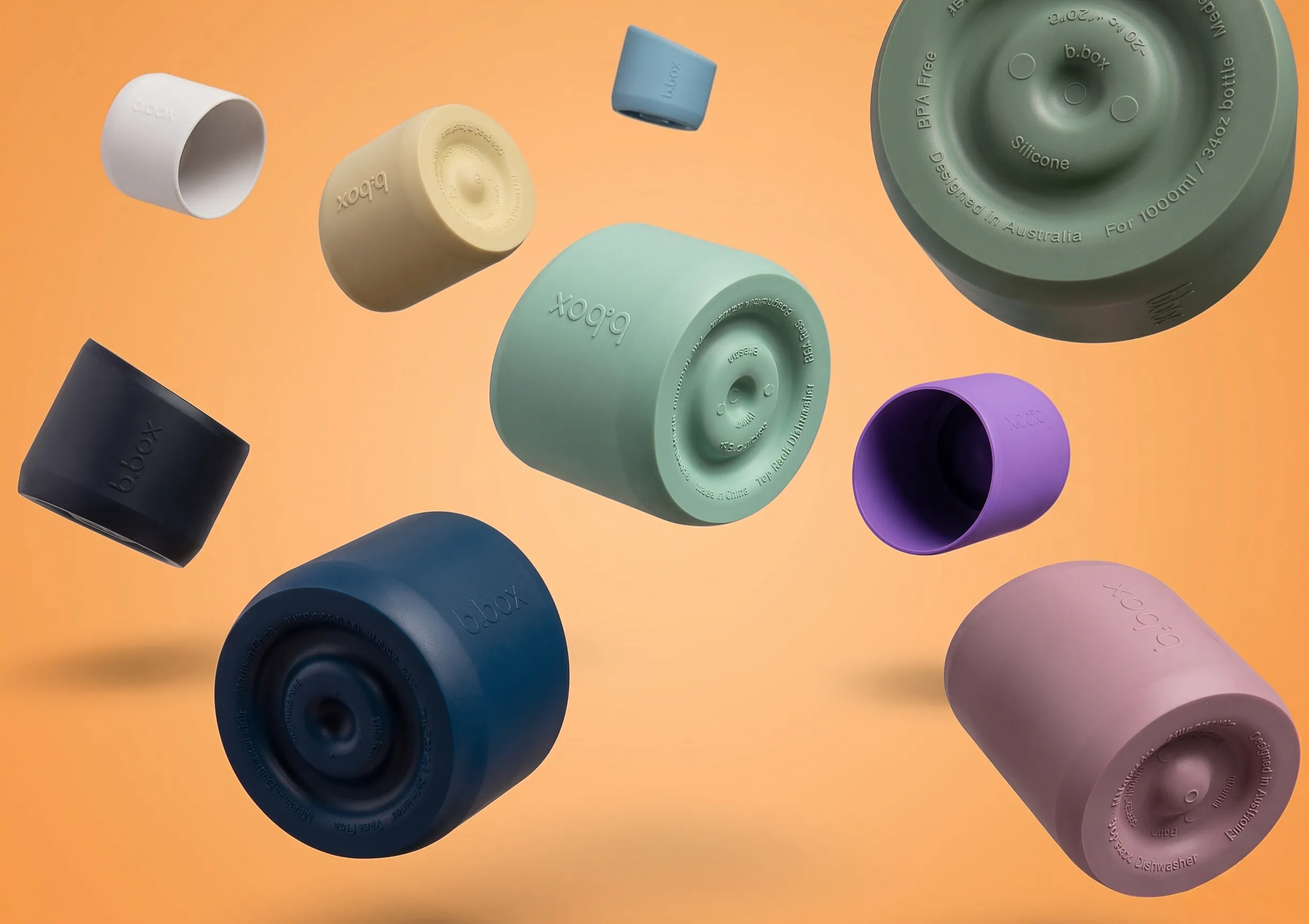
Getting the balance right took real iteration. The cushioning height, wall thickness, and undercut below the support all had to be tuned so the sleeve gave genuine protection without ballooning into the oversized "pillow" look I was explicitly trying to avoid.
The Process
1. Research & Early Direction
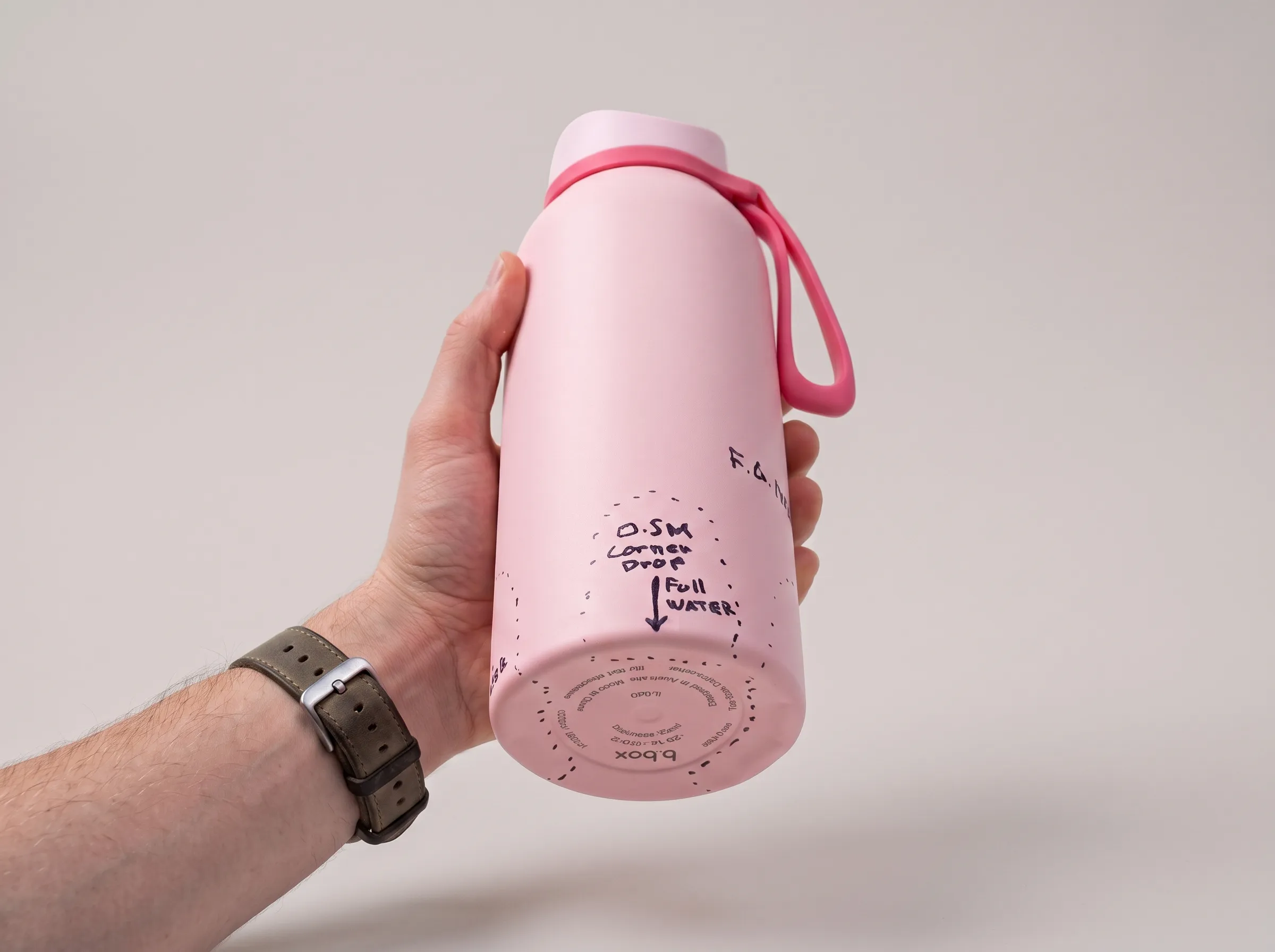
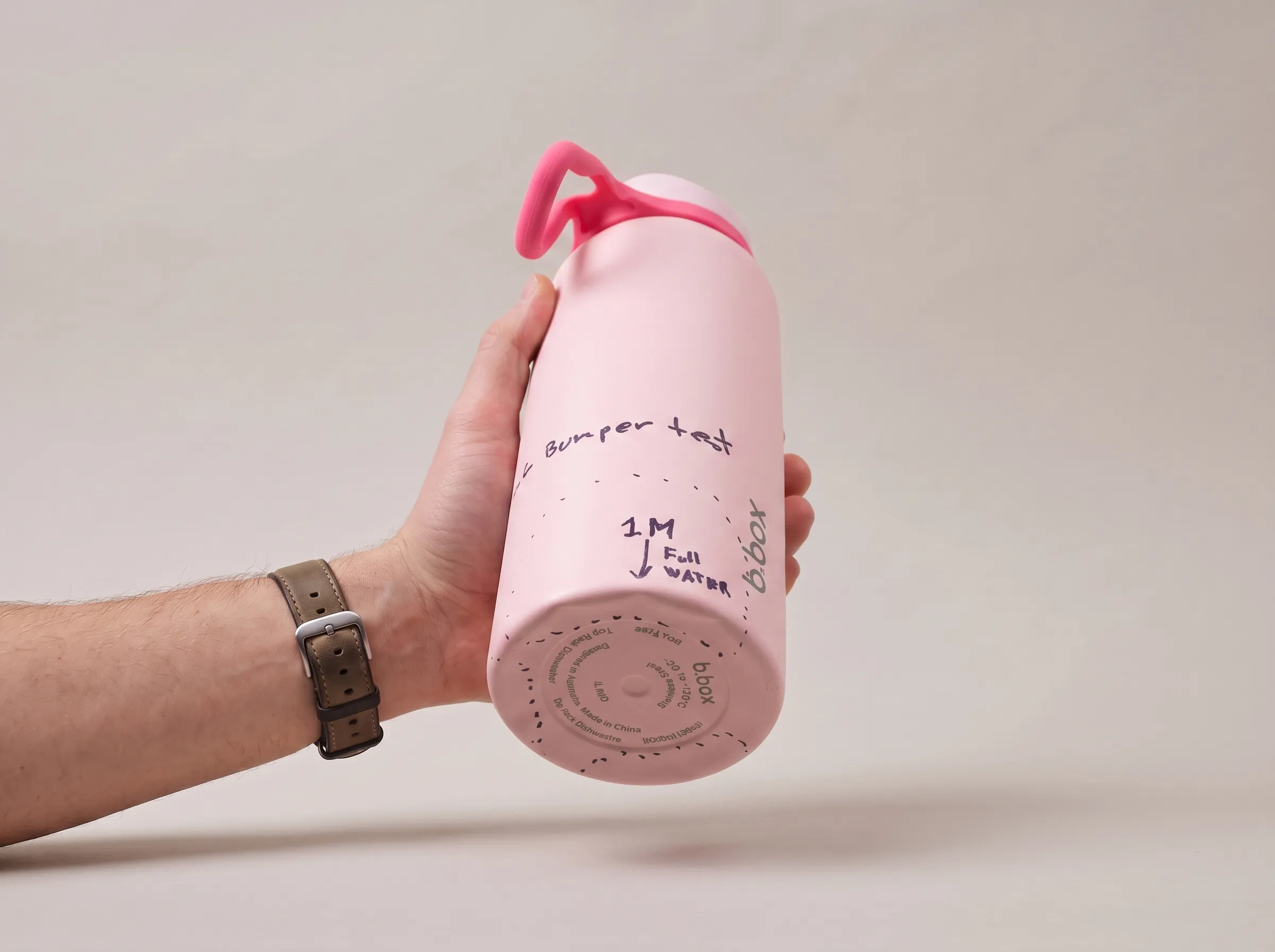
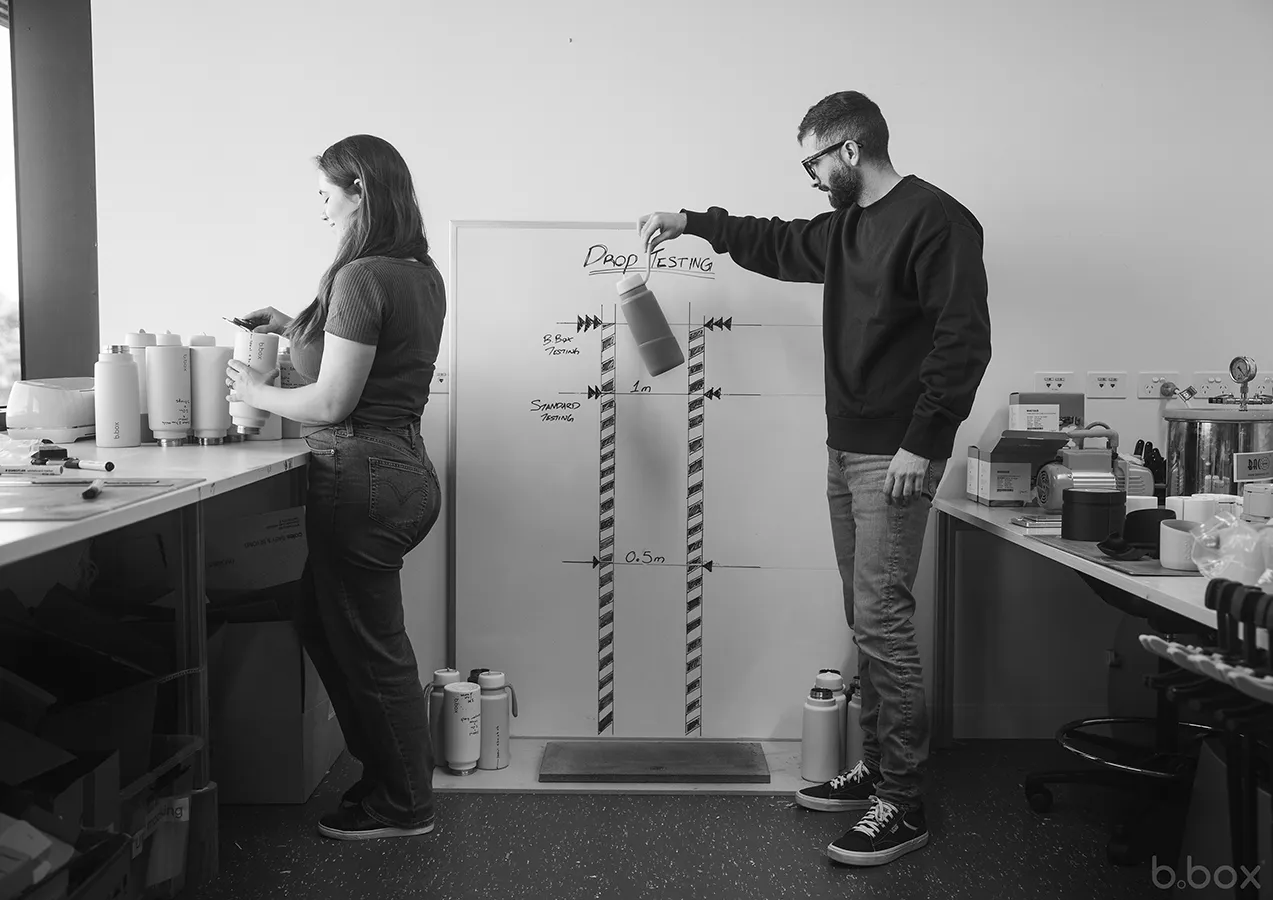
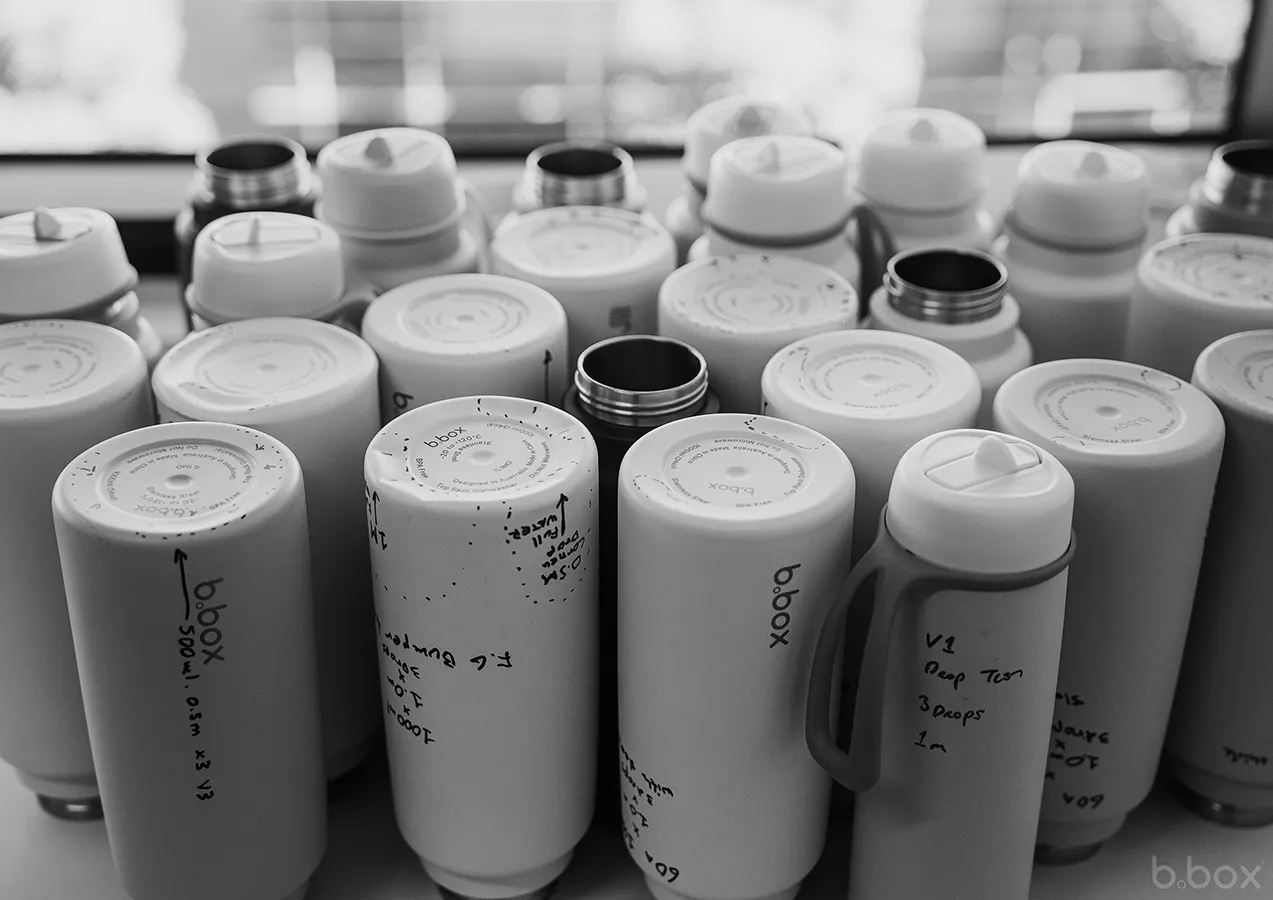
I benchmarked existing bumpers against the failure mode I was actually trying to solve. The clearest evidence came out of drop testing: a standard 2mm silicone sleeve on a 1L insulated bottle still let the base take significant denting when dropped from a metre, and a competitor bumper with internal stiffening ribs performed worse; the ribs transmitted impact straight through to the bottle rather than absorbing it. That result shaped the whole direction: the sleeve needed to redirect force away from the bottle, not just add a layer of material in front of it.
2. Concept Development
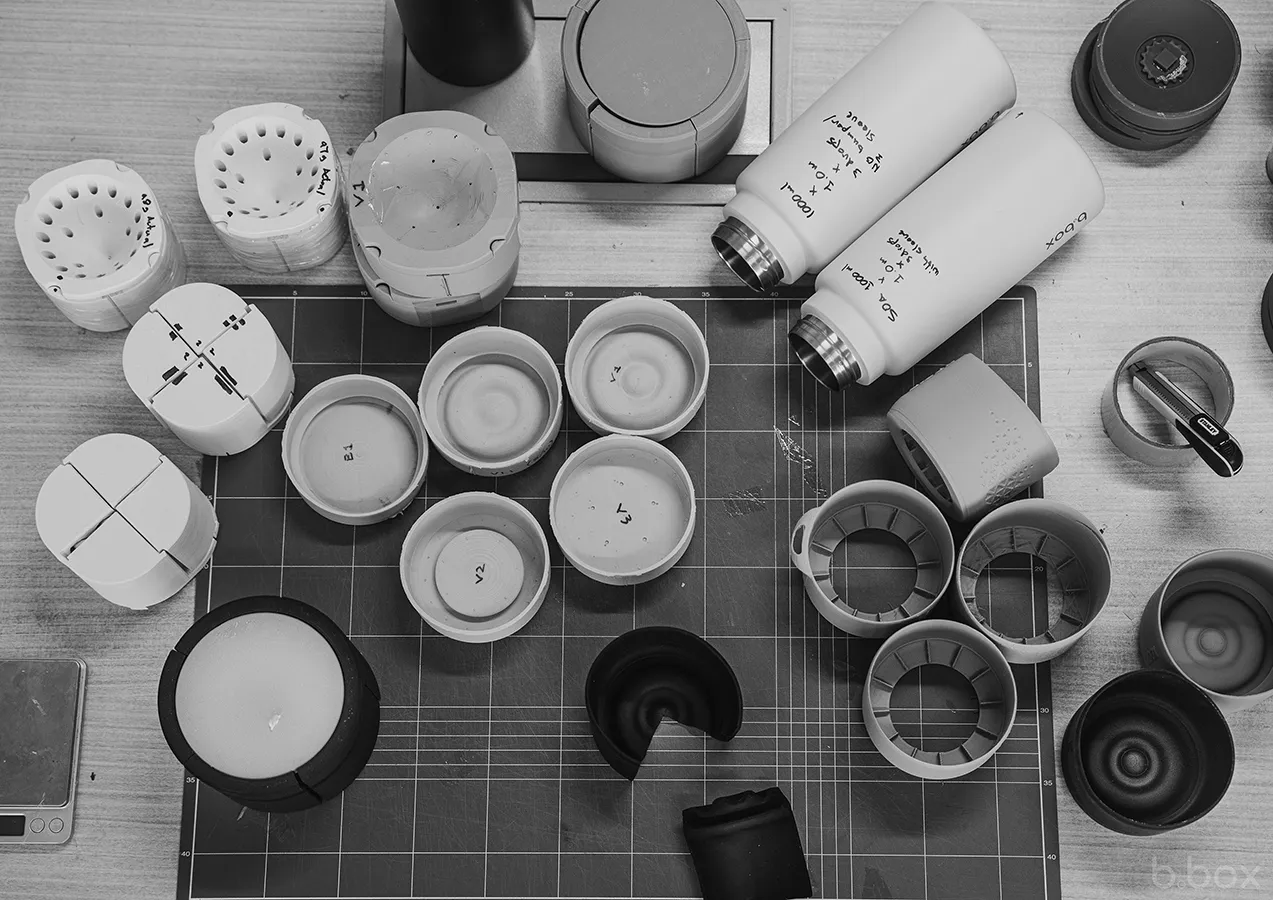
I explored a few different approaches to creating a cushioning effect: solid elastomeric buildup, foam inserts, and ultimately the air-pocket-and-support-ledge approach that became the patented mechanism. I chose the air-pocket approach because it didn't add material cost or weight, and because it could be tuned by geometry alone rather than needing a second material or component.
3. CAD & Prototyping
From there, I worked through repeated rounds of prototyping and drop testing, tuning the support ledge, air-pocket depth, and wave pattern against real impact results rather than simulation alone. Each test informed the next CAD iteration, refining wall thickness and undercut geometry until the sleeve consistently outperformed both the standard construction and competitor benchmark in my drop tests.
4. DFM & Manufacturing
I carried the design through DFM, resolving wall thickness, tolerances, and undercut geometry to prepare it for single-piece moulding at scale.
- I adapted the undercut geometry for compression moulding without compromising the sleeve’s protective function.
- I specified premium food-grade silicone to deliver durable cushioning, dishwasher safety, and stronger UV and heat stability than conventional TPU bumpers.
5. IP Protection
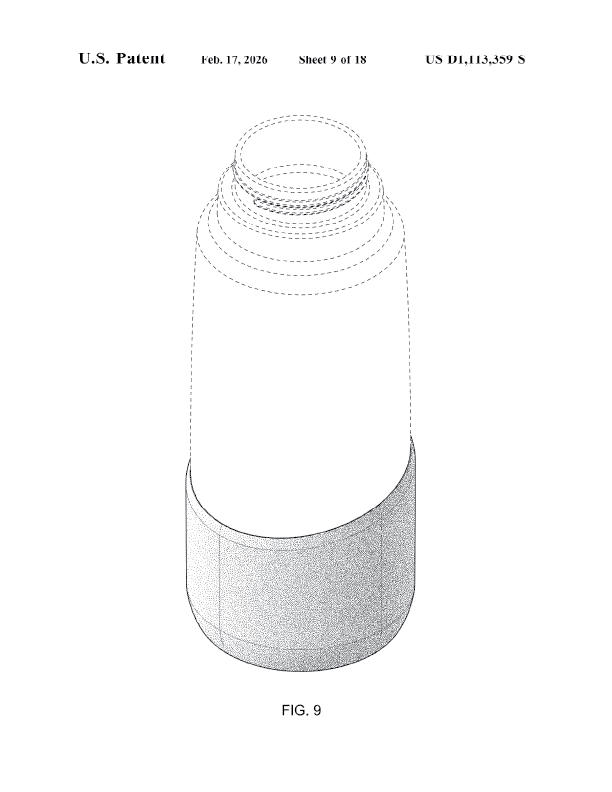
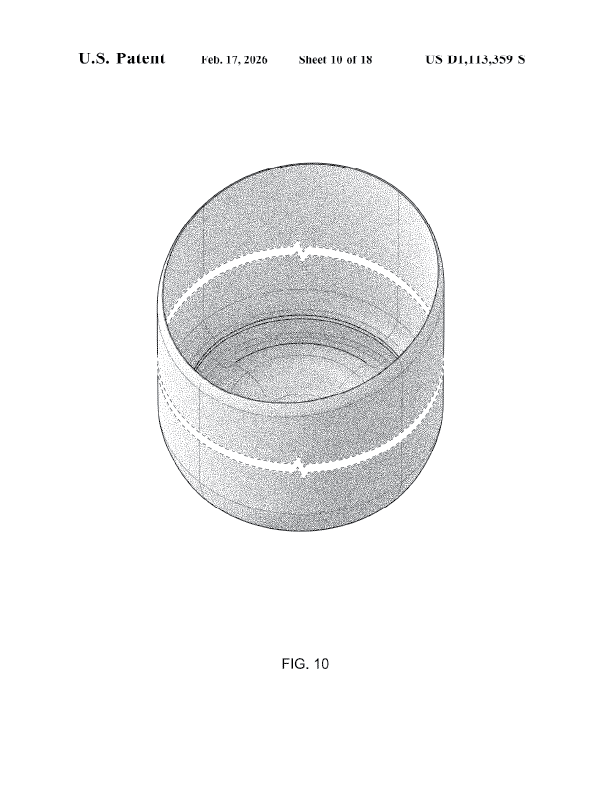
The cushioning mechanism was novel enough to protect as a utility patent. Alongside the product development, I prepared the technical drawings for the air-pocket and support-ledge geometry, and worked directly with the legal team to develop the patent text. I defined how the support ledge, enclosed air pocket, and flexible base geometry work together to redirect impact forces. I also prepared the design-registration drawings that are now registered across more than 18 international jurisdictions.
Outcome
The Bumper Sleeve was shortlisted as a finalist in the Product Design category at the 2025 Victorian Premier’s Design Awards, and the cushioning mechanism I developed was granted a utility patent. This project reinforced how much performance can be achieved through carefully tuned geometry and material choice, without relying on extra components, complex ribbing, or excessive padding.