Divided Suction Plate
A modular mealtime plate designed to grow with children, from first feeds to independent eating.
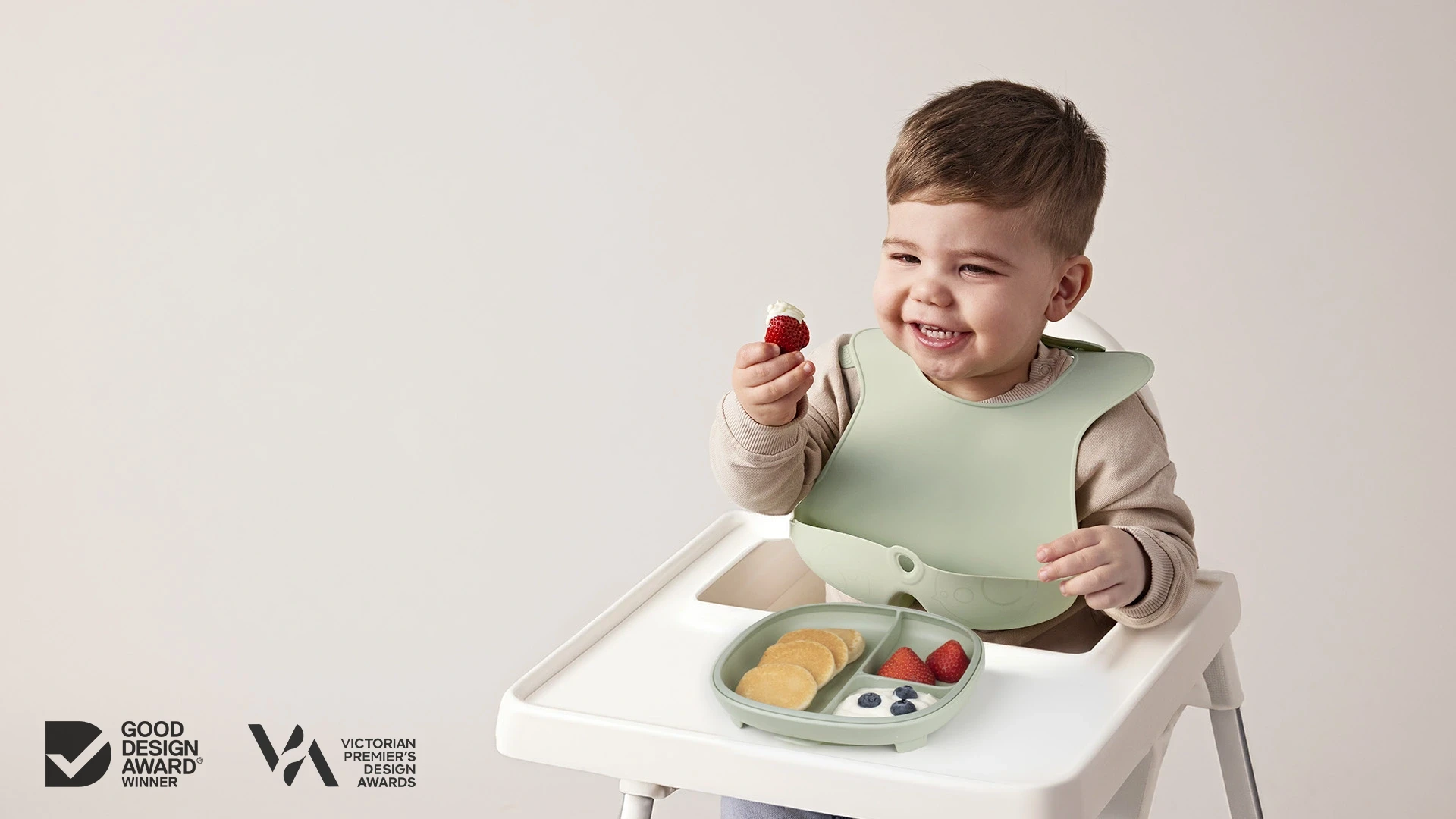
A small product with a lot going on
I designed this project from the initial brief through to production and launch. The aim was to create a plate that could adapt as children grow; helping with self-feeding, reducing spills, and remaining relevant beyond a single stage of use. What may look simple on the surface involved a lot of careful development behind the scenes: concept generation, CAD, prototyping, DFM, factory collaboration, IP support, and launch visuals. The end result is an easy-to-use product because the hard thinking was already built in.
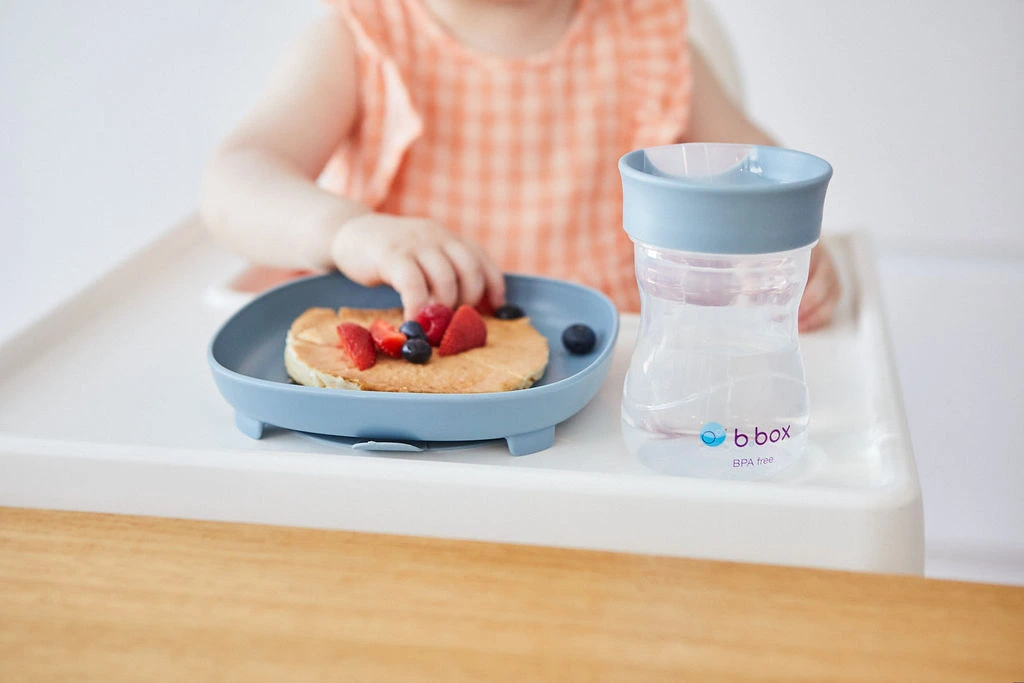
The Brief
Create a mealtime product that could adapt with a child’s development while staying easy to use, easy to clean, durable in daily life, and appealing enough for parents to keep using over time.
- Reduce sliding, spills, and frustration during meals.
- Support self-feeding and the development of fine motor skills.
- Handle a variety of foods, portions, and changing preferences.
- Avoid the short lifespan of single-purpose feeding products through a more modular design.
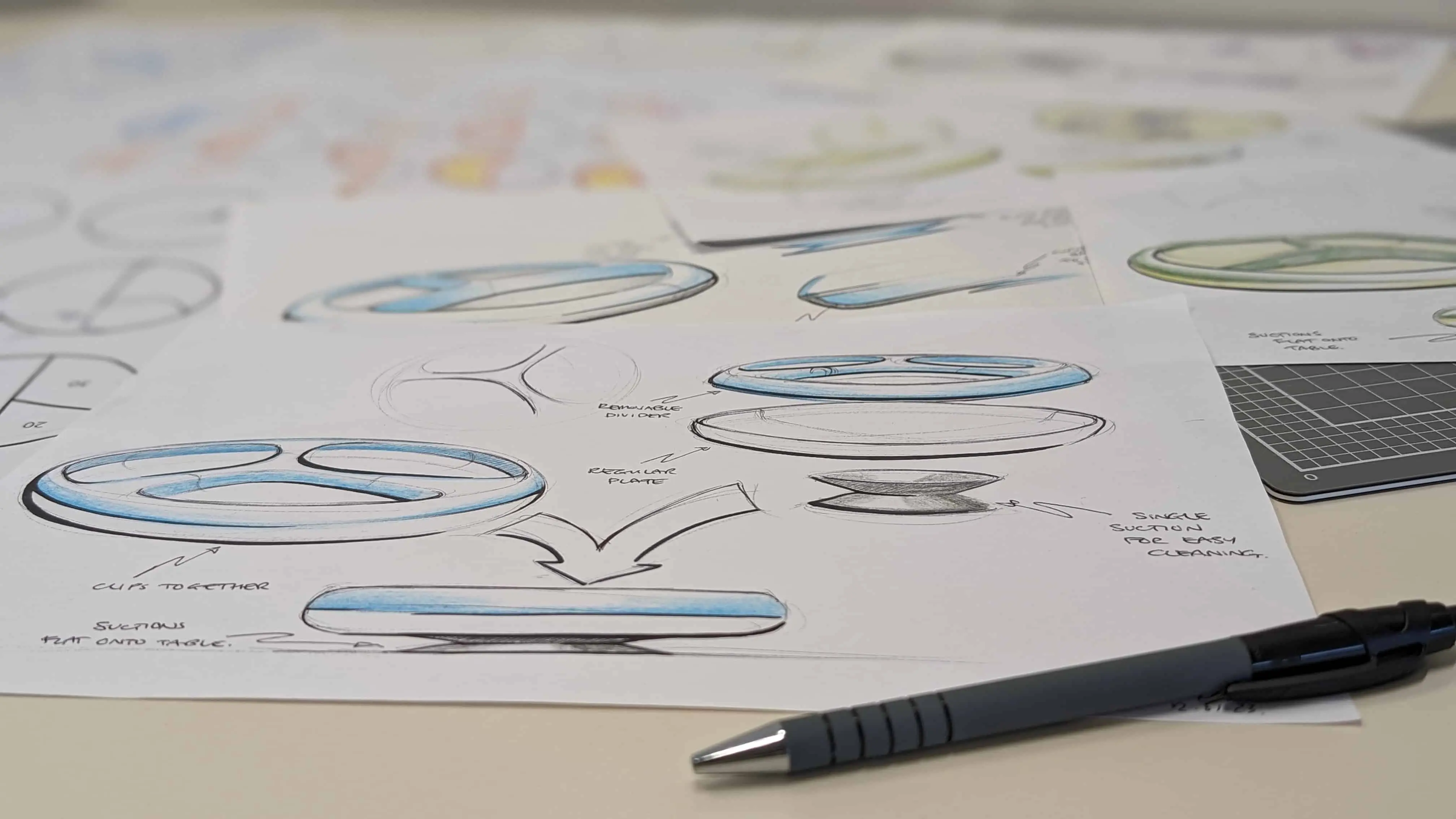
Early thinking around modularity, portioning, and how the product could age up with the user.
A plate that adapts to the user
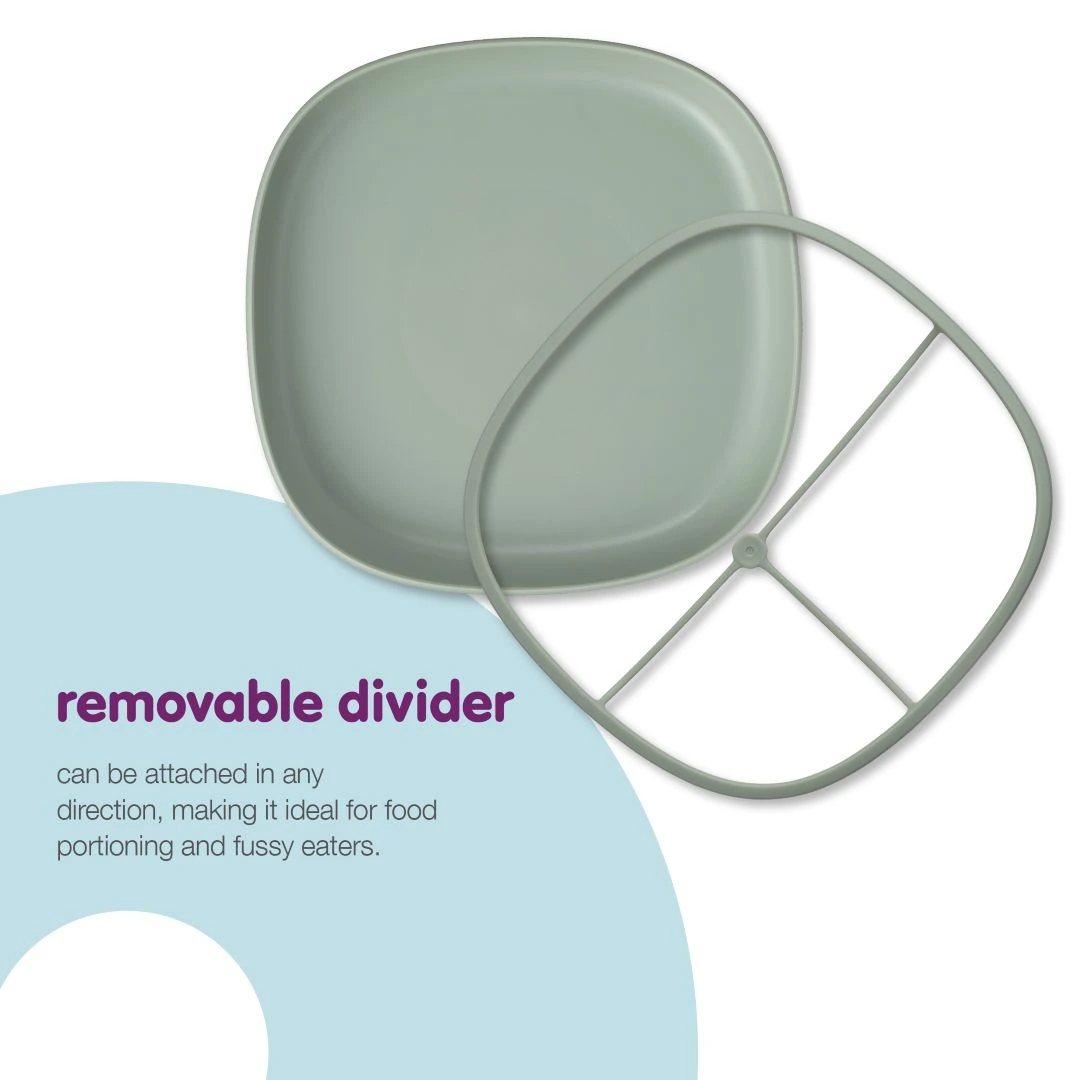
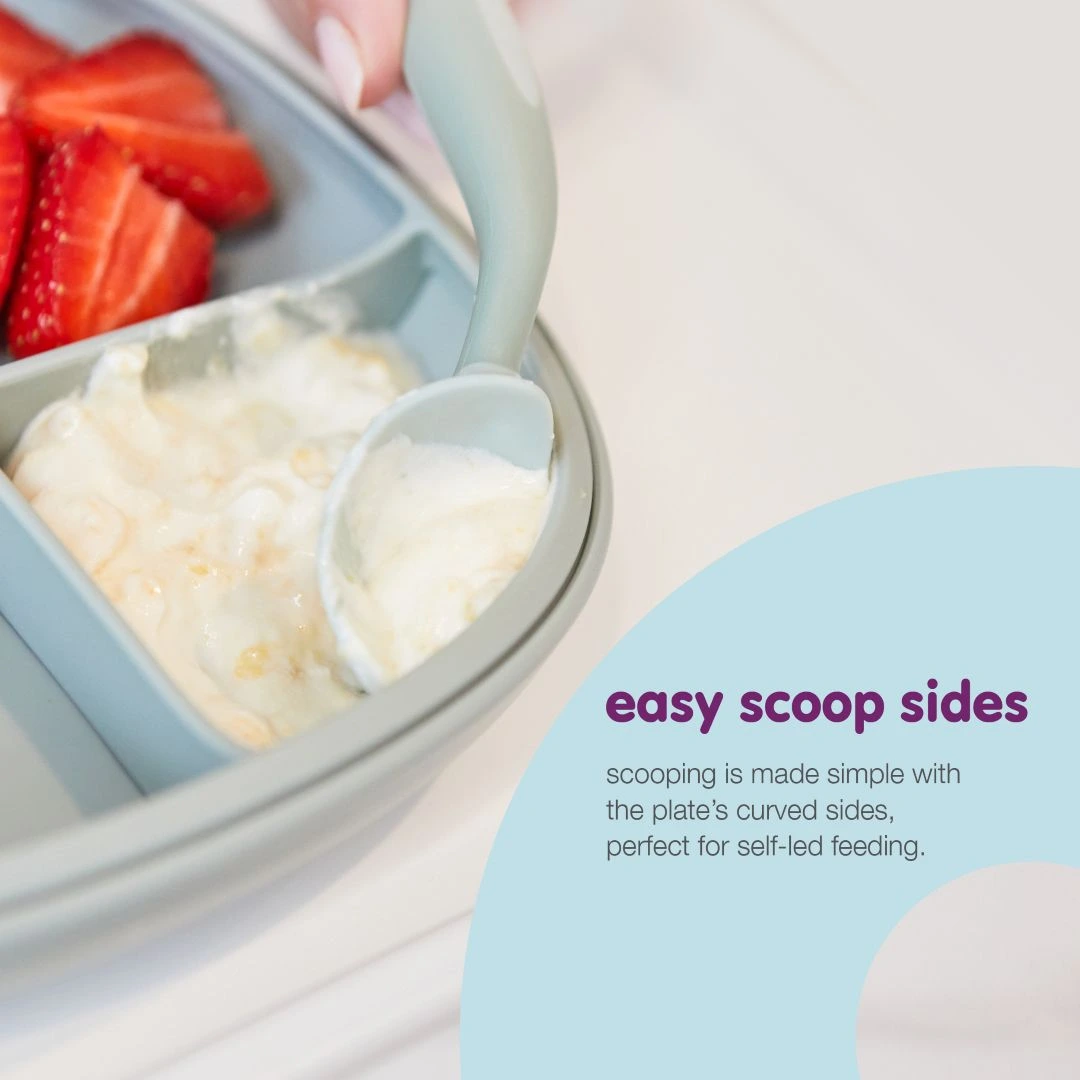
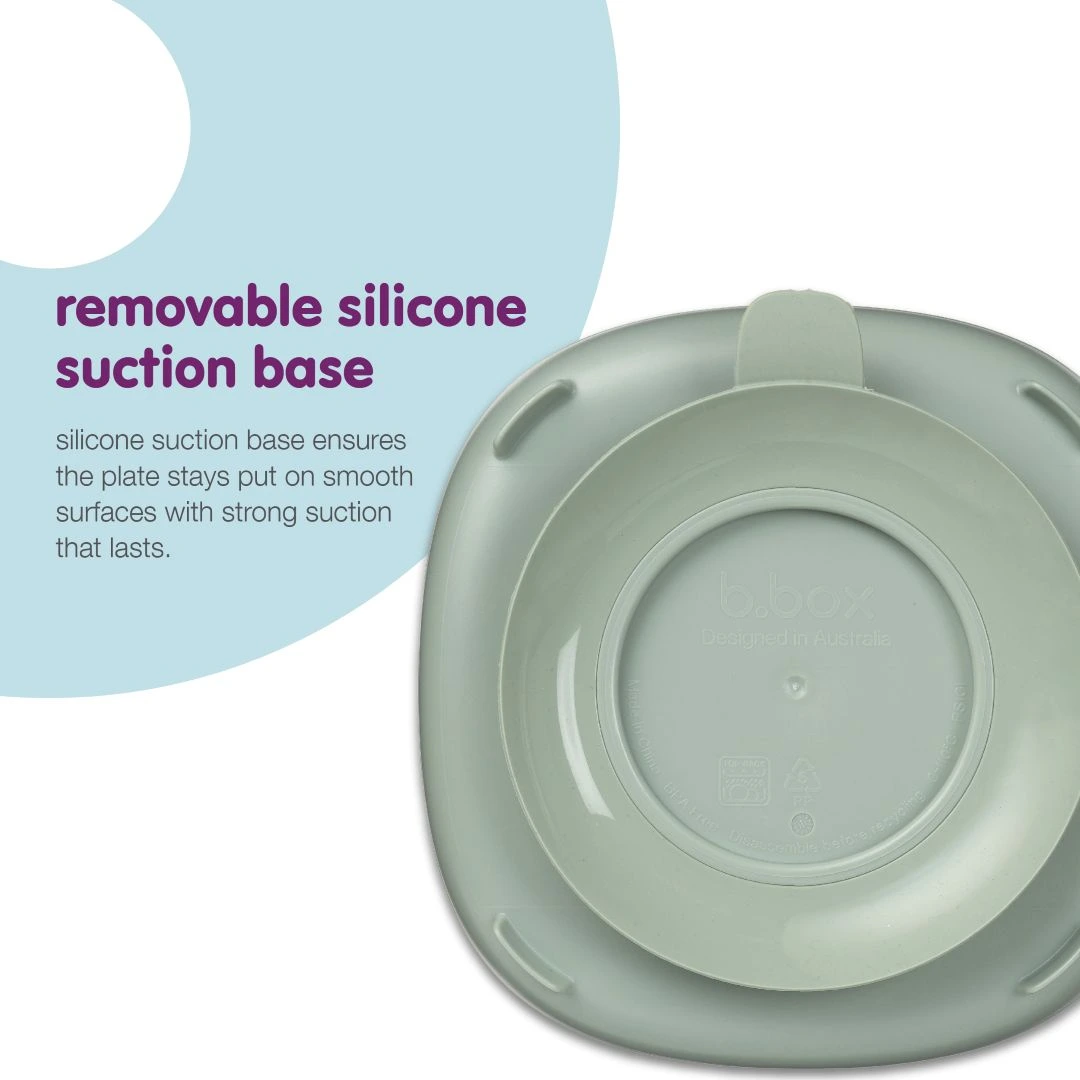
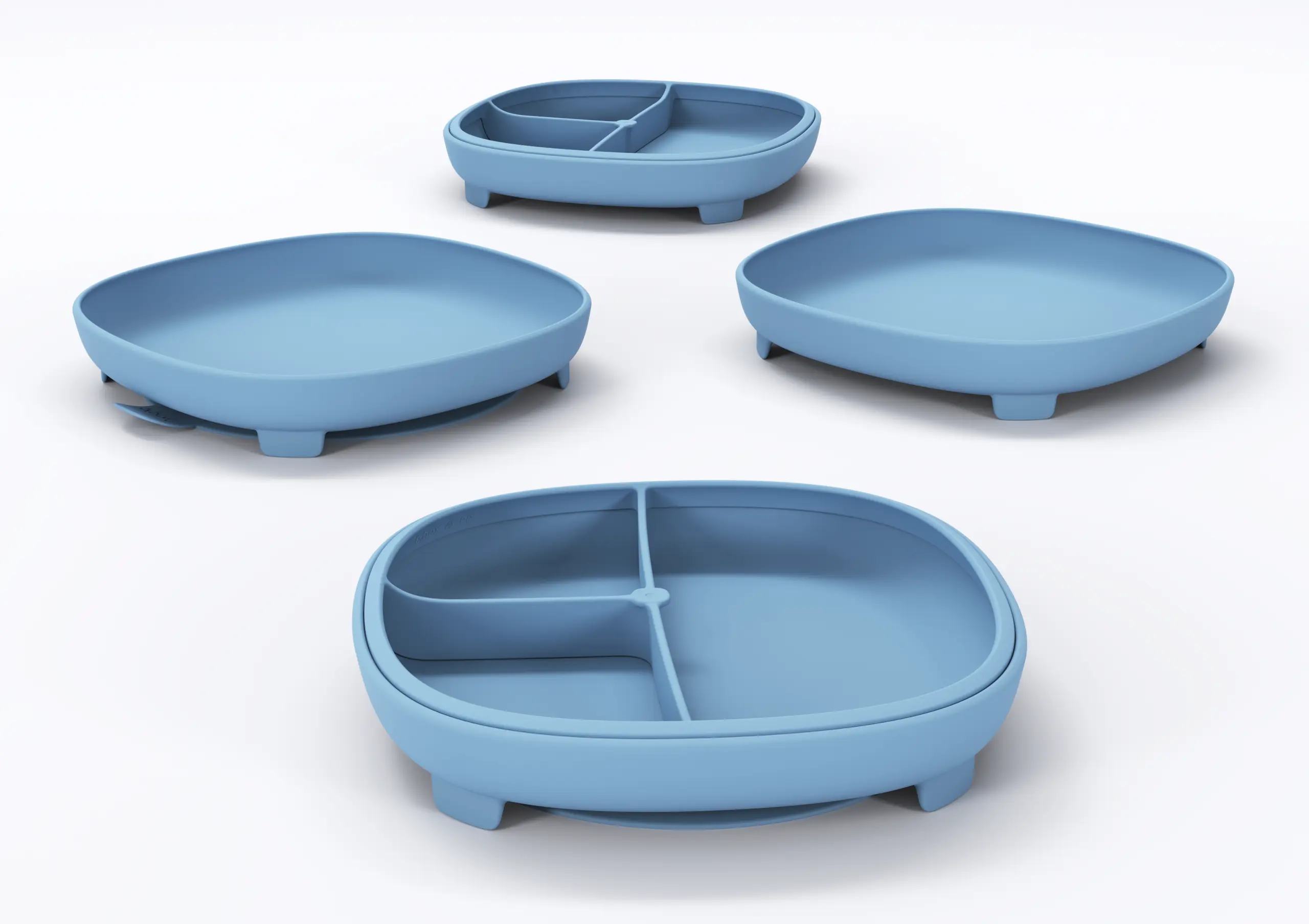
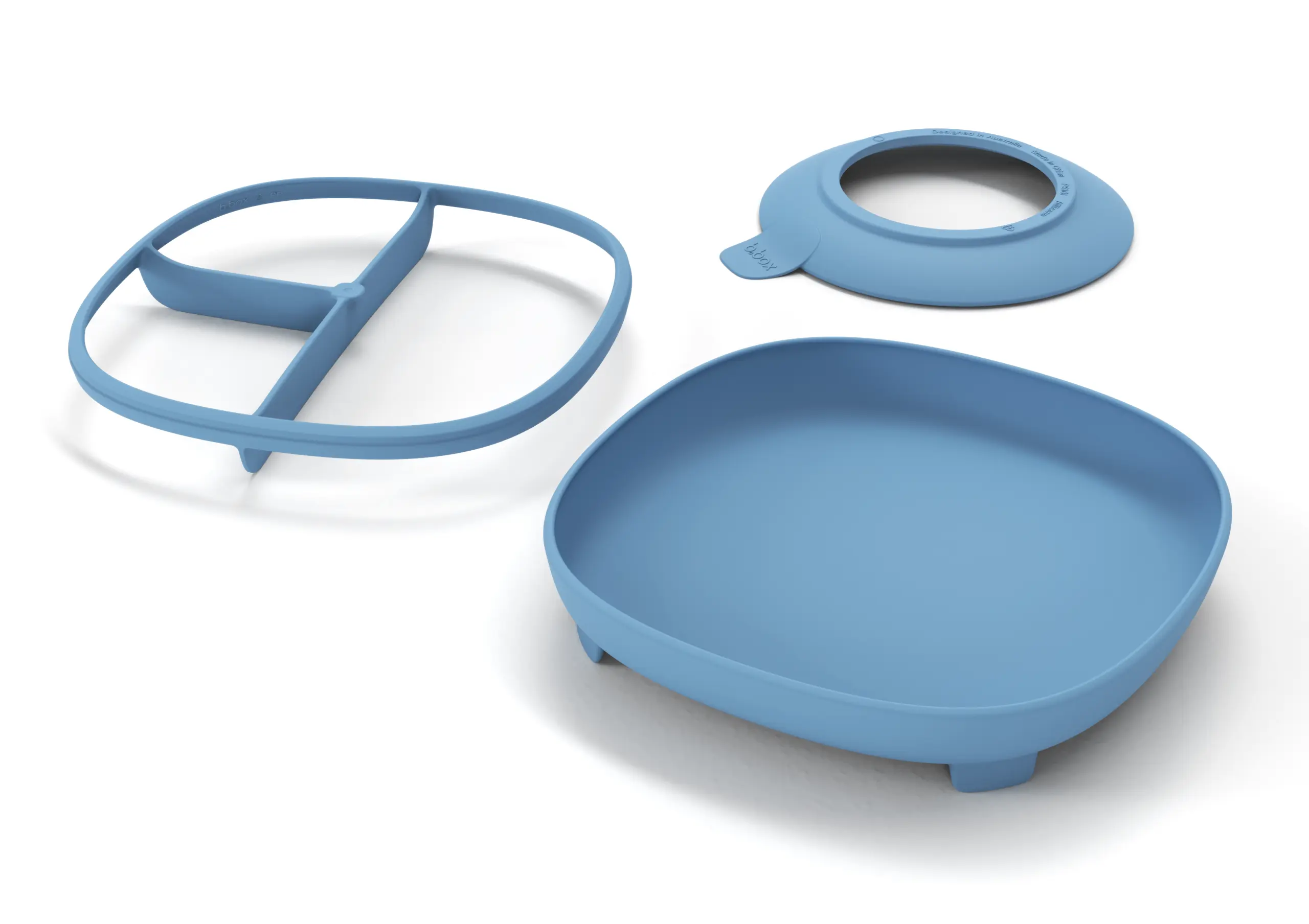
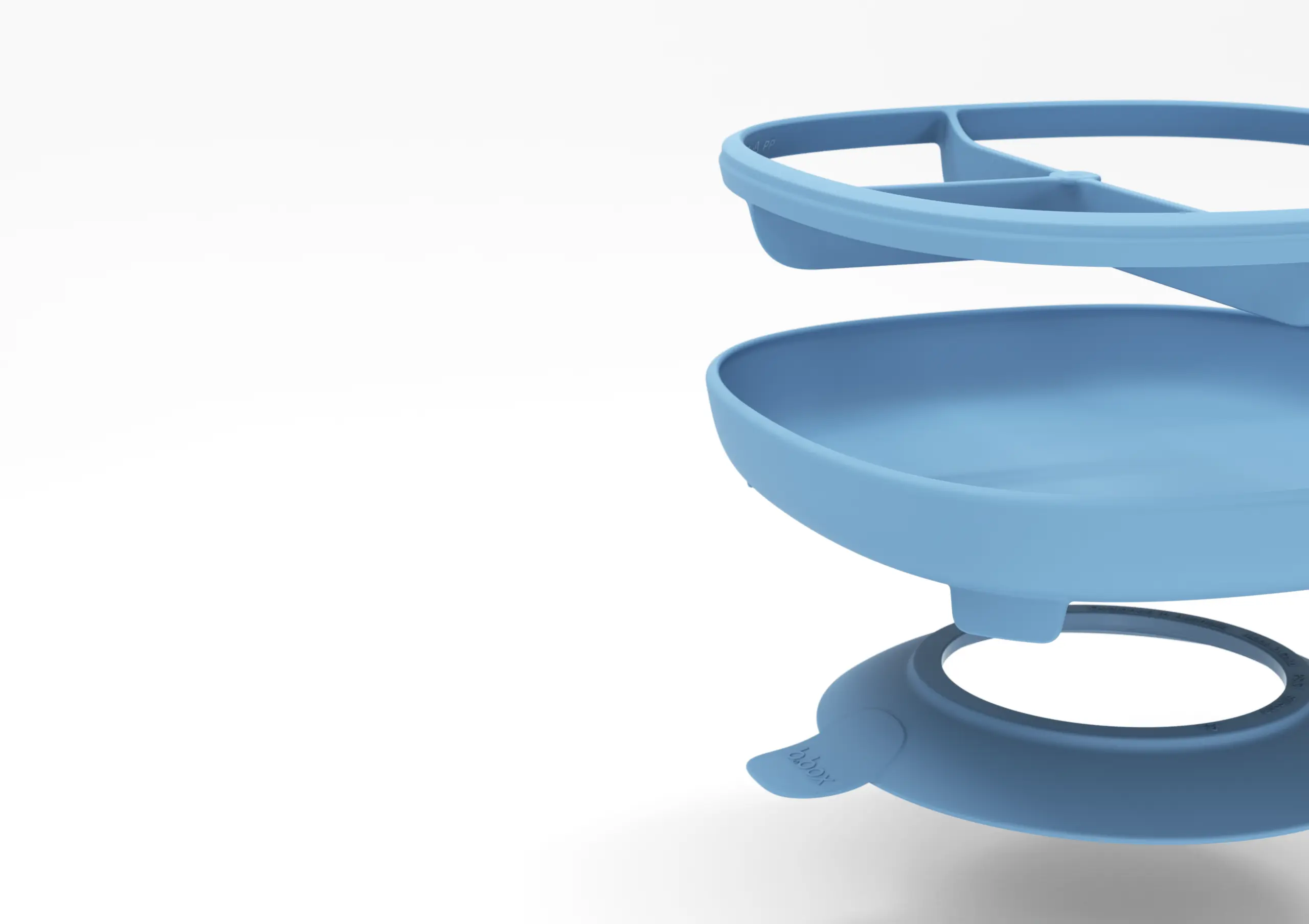
The design centres around a removable divider and suction base, allowing the product to shift between divided and non-divided use depending on the meal and the child’s stage of development. The geometry was refined to make self-feeding easier, with curved walls and an overhanging divider edge that helps guide food back onto utensils. Combined with a durable suction system and separable parts, the product balances usability, cleanability, and long-term value in one compact system.
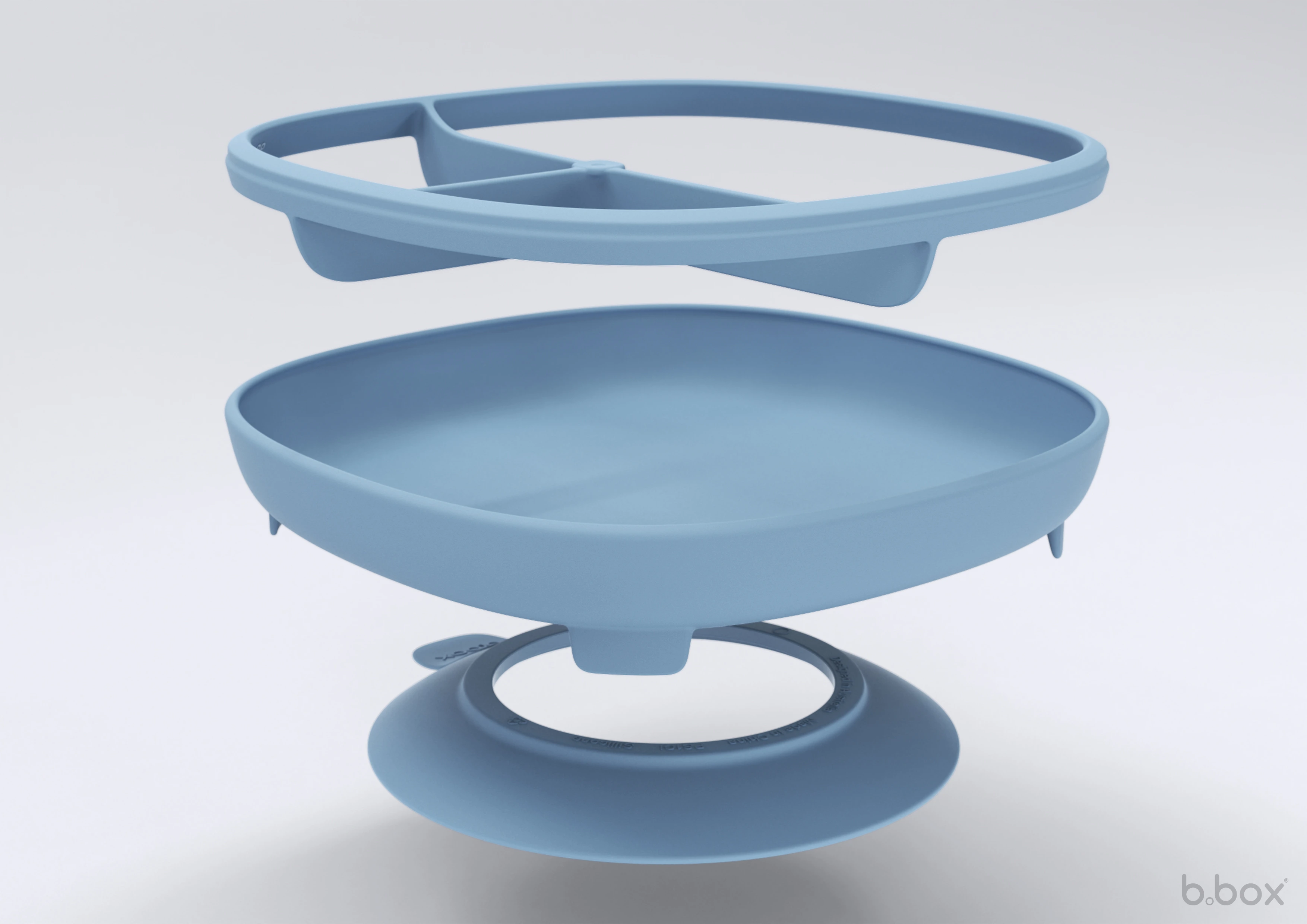
Designed around real use
Each detail was shaped to make mealtimes a little easier for both children and parents.
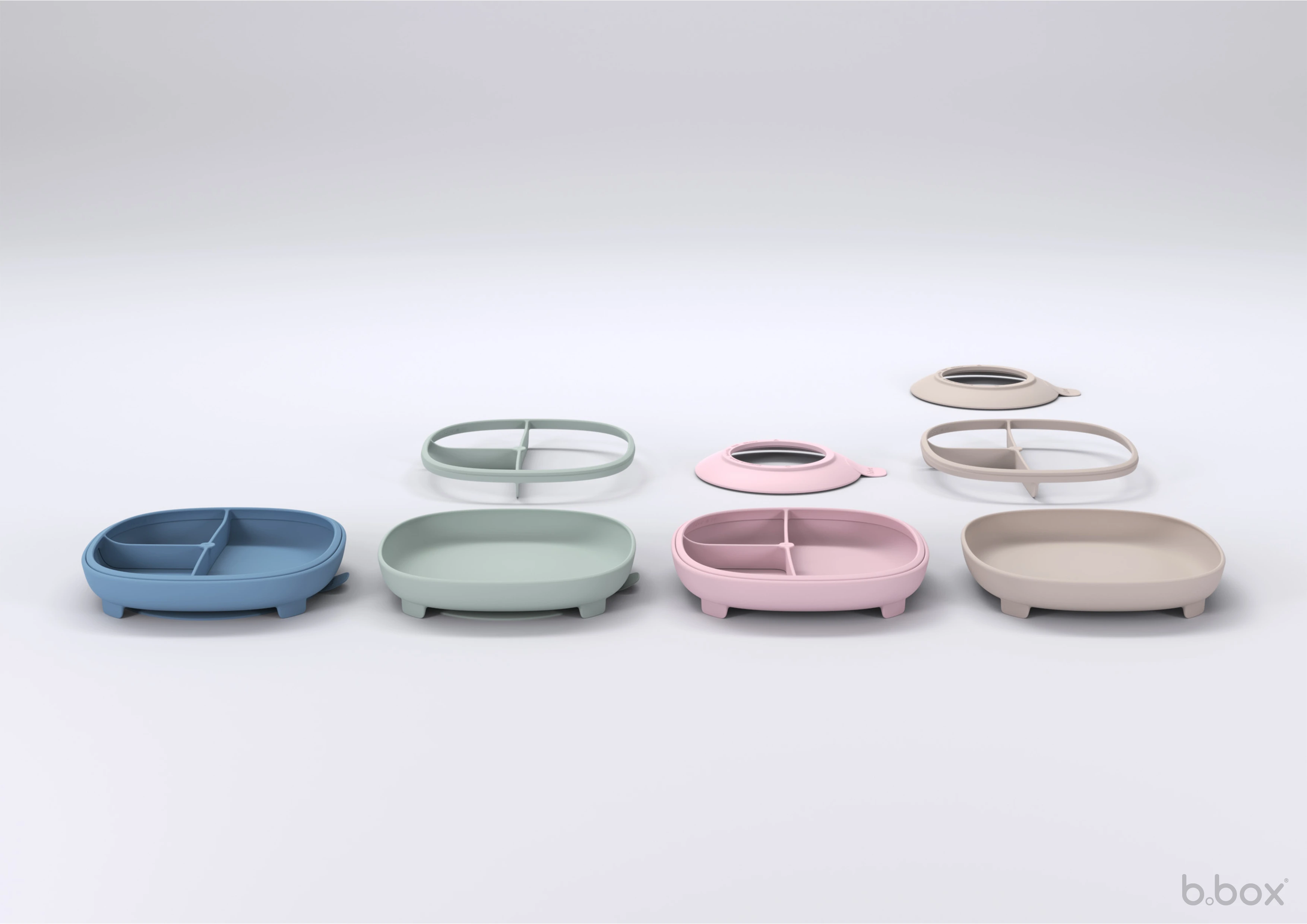
Colour and Range
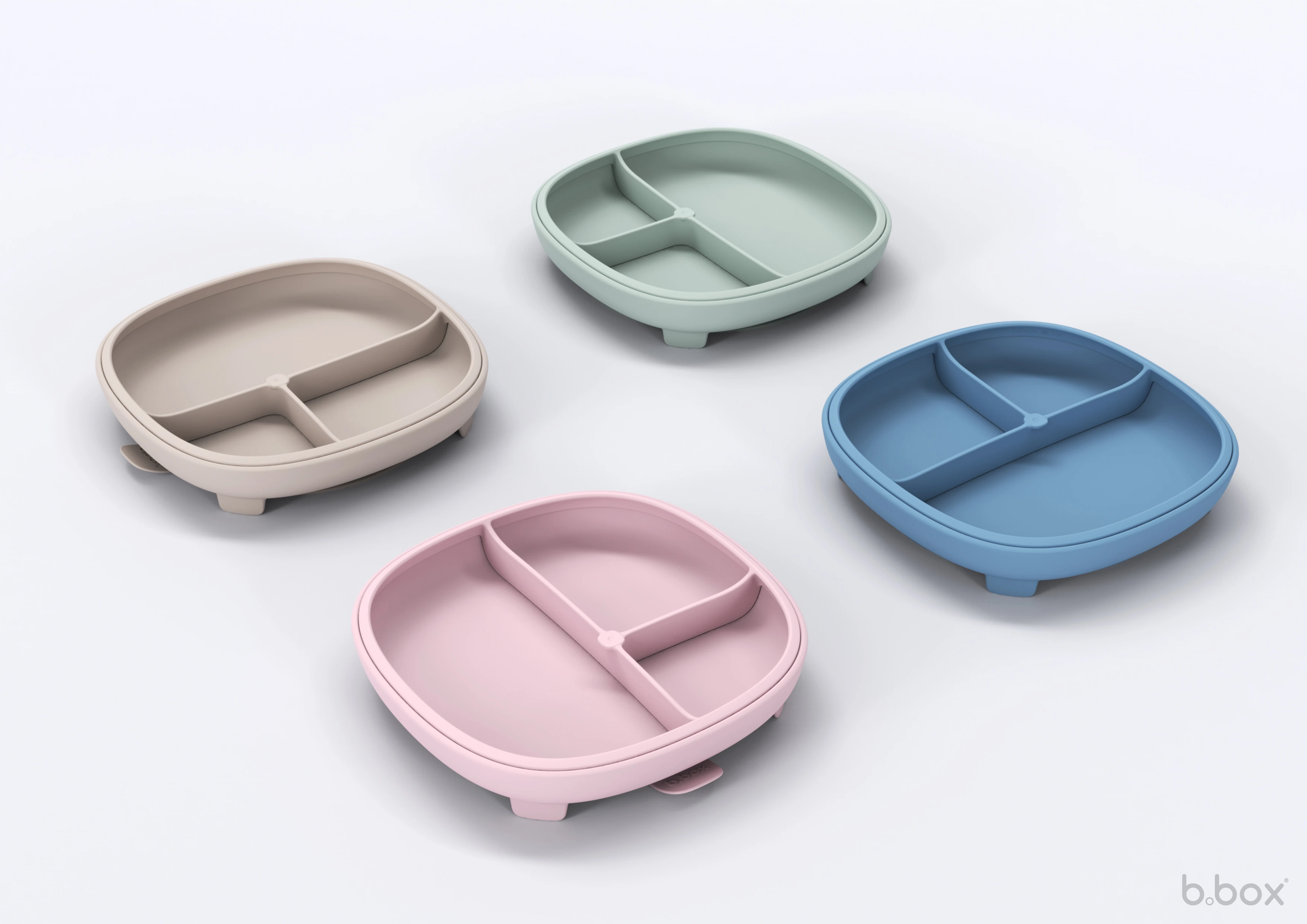
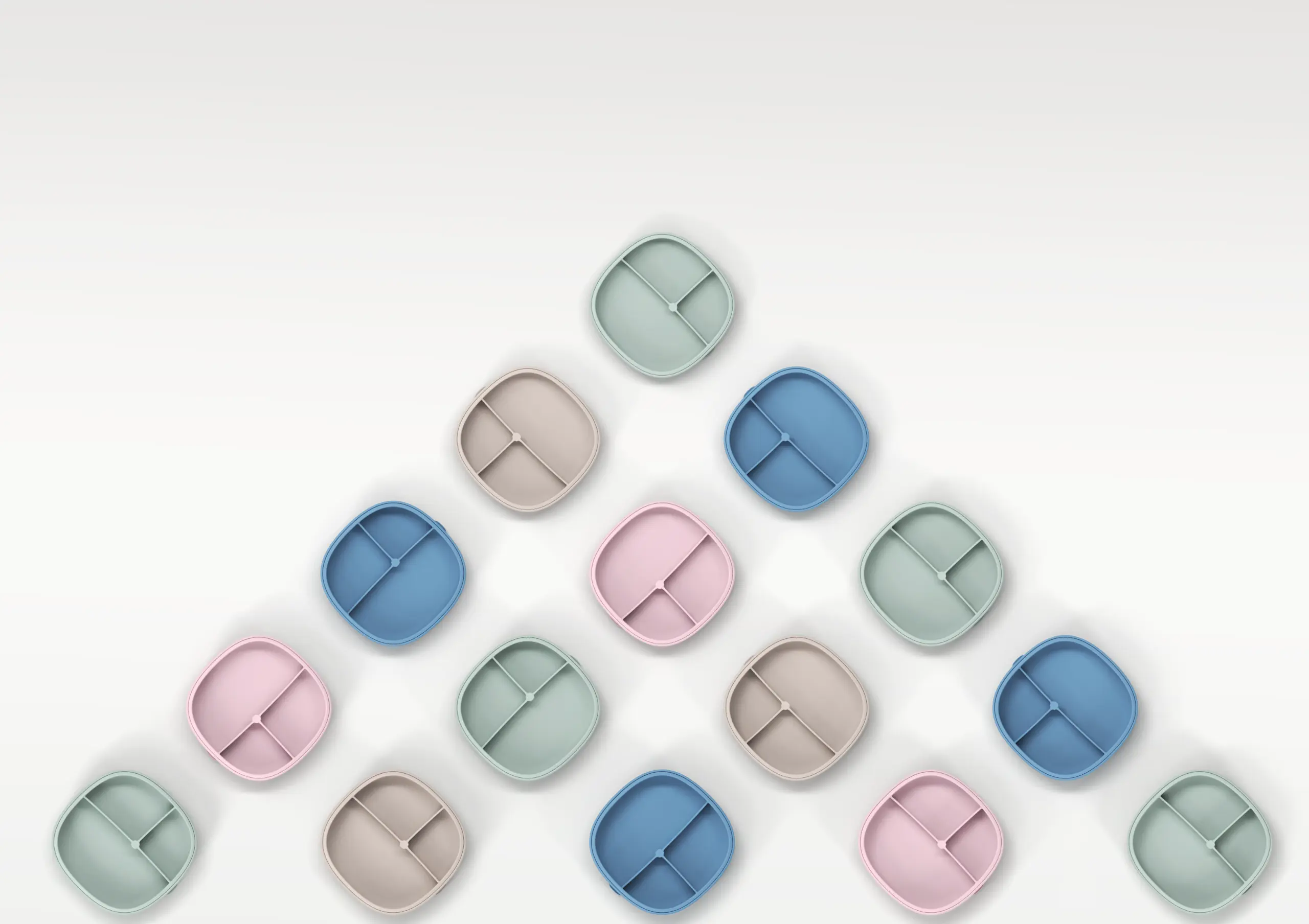
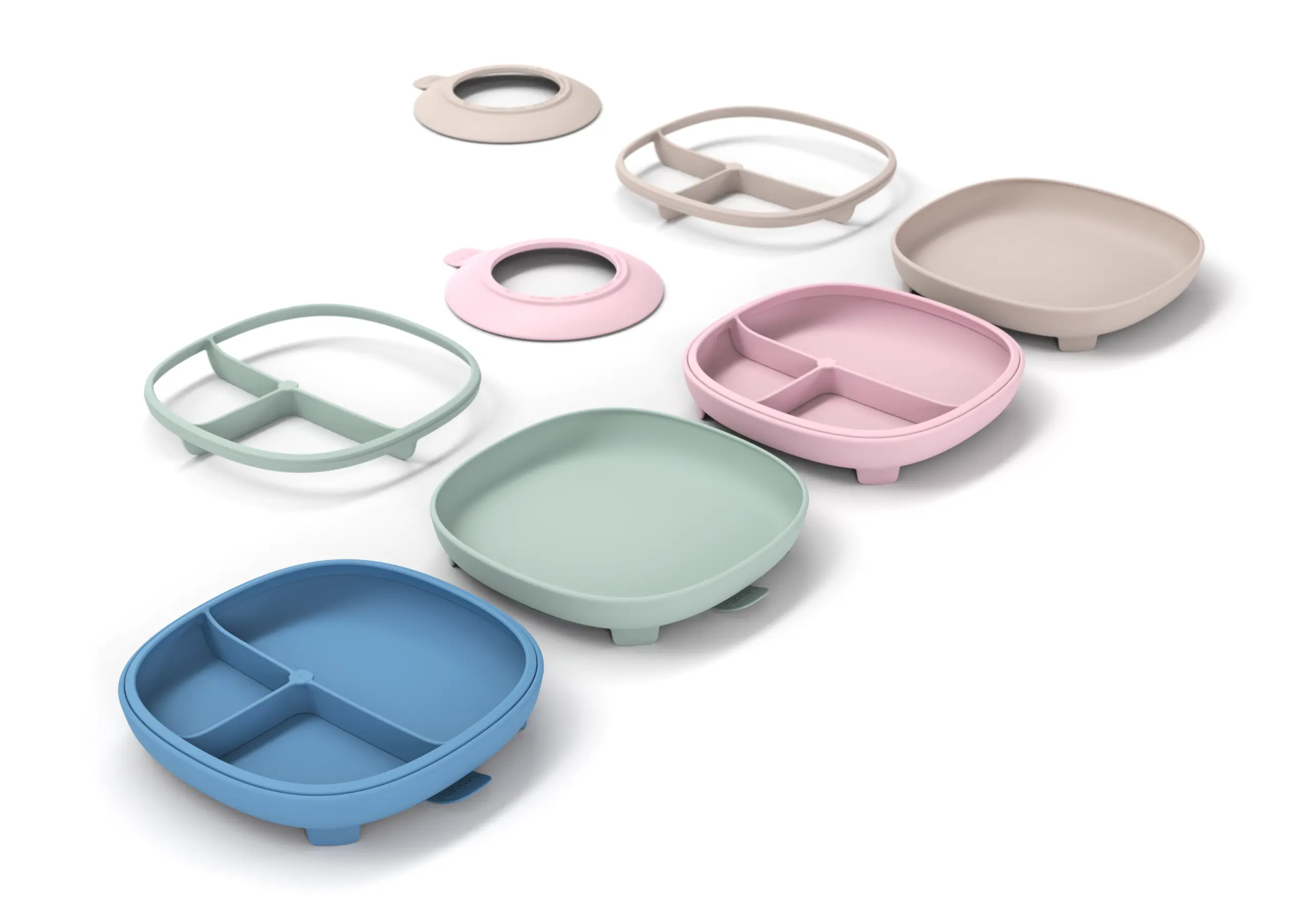
Alongside the product development work, I created launch-ready visuals to present the plate across its full colour range. Showing the product as a family helped communicate shelf presence, brand fit, and the flexibility of the design beyond a single SKU.
Detailed Process
1. Research & Early Direction
The project started with a close look at feeding behaviours, pain points at the table, competitor products, cleaning habits, and the ways existing plates often become obsolete too quickly. That early work helped shape a direction focused on adaptability, less mess, and longer-term value.
2. Concept Development
I explored different ways the product could separate food, attach to surfaces, and remain intuitive without relying on instructions. A modular approach quickly stood out because it solved more than one problem at once: usability, lifespan, cleaning, and product versatility.
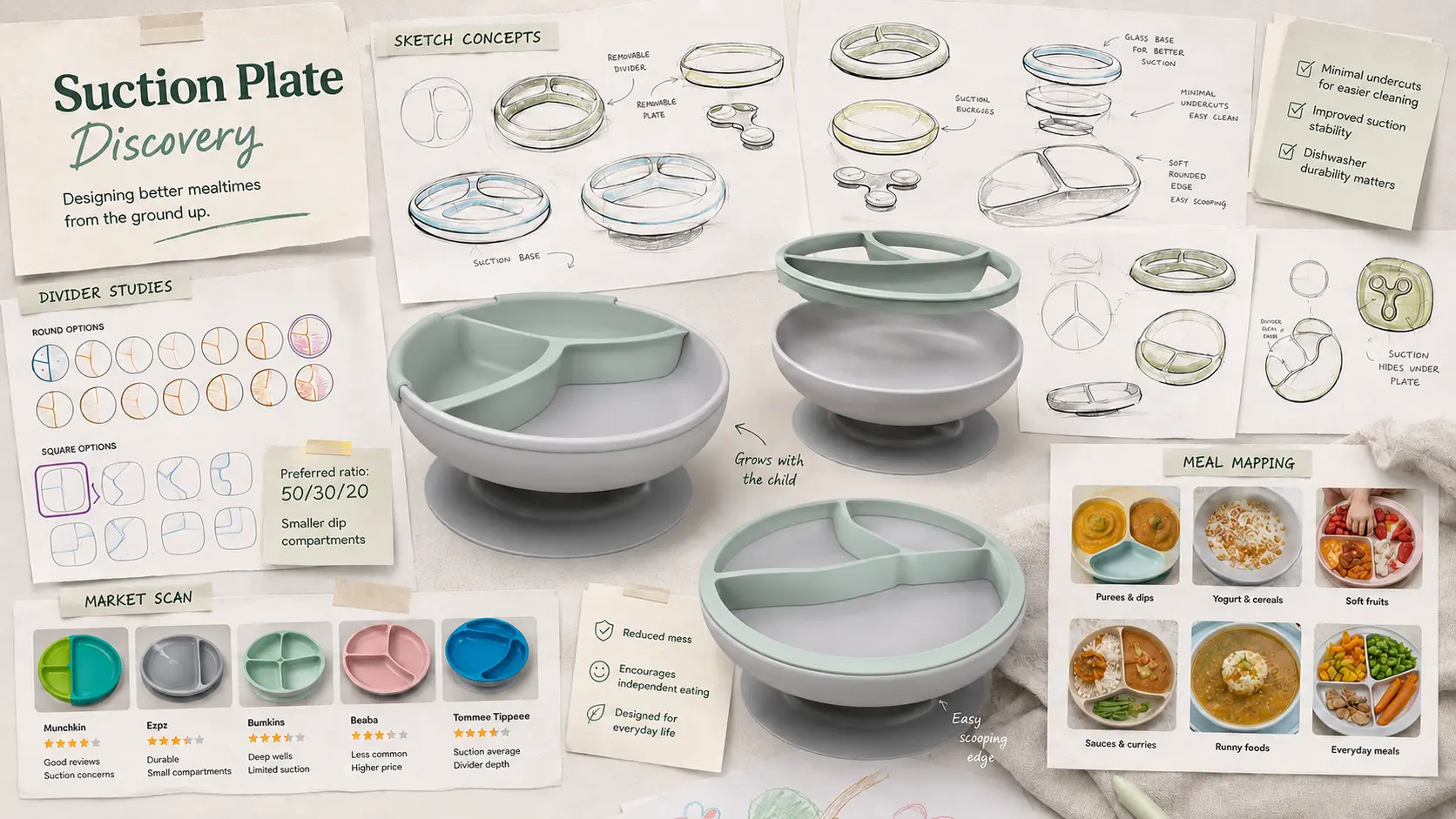
Early research exploring customer needs and use cases.
3. CAD & Prototyping
From there, the design was refined through CAD modelling and rapid prototyping. A lot of the iteration focused on proportions, clipping details, suction behaviour, and how to make the product feel simple and natural in use.
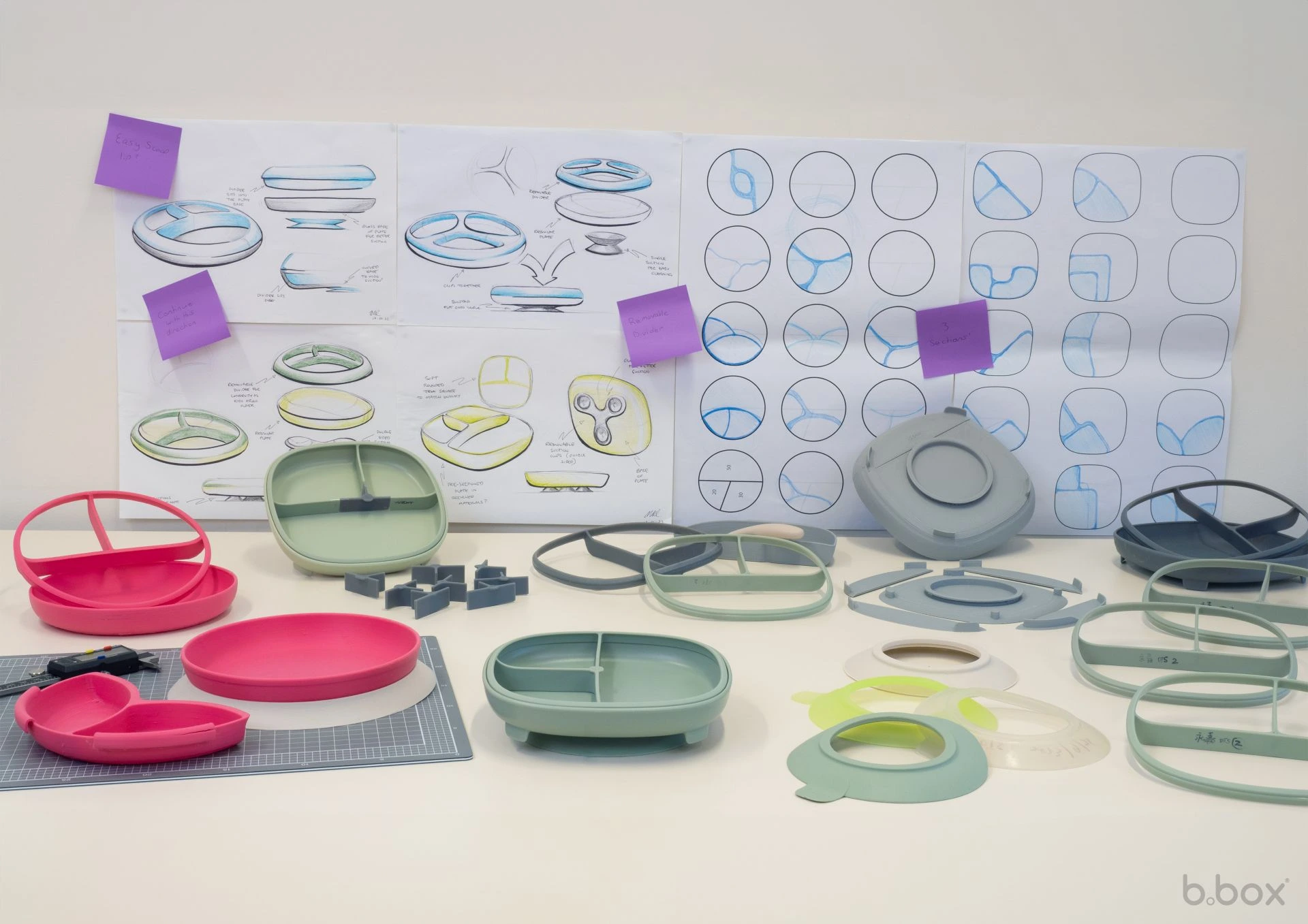
Testing divider layouts, proportions, suction ideas, and the overall product language.
4. Manufacturing & DFM
I carried the project through into DFM and production support, including travel to China to work directly with suppliers and toolmakers. Being on the ground helped resolve tolerance, finish, tooling, and colour issues much more precisely than a remote handover ever could.
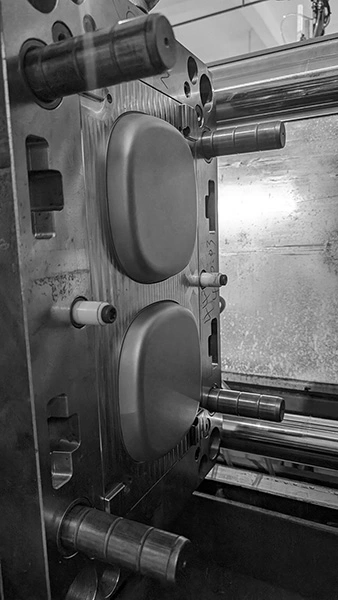
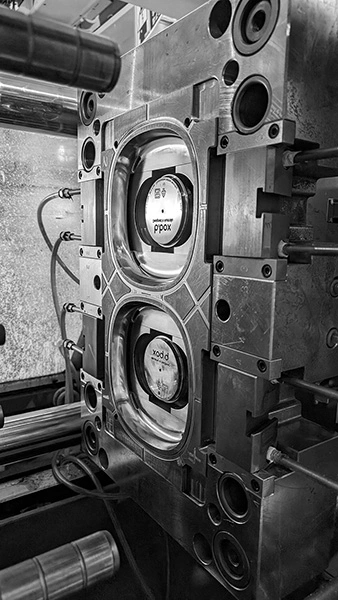
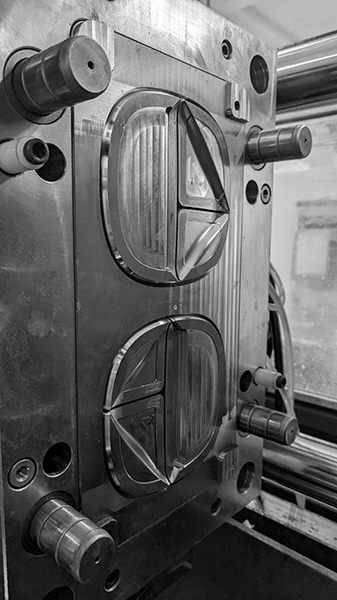
Factory and tooling support during development for production-ready outcomes.
5. IP Protection
As the product matured, I also prepared the technical visuals required for IP lodgement. This involved translating the design into a clear and defensible set of drawings that captured both the functional thinking and the uniqueness of the product.
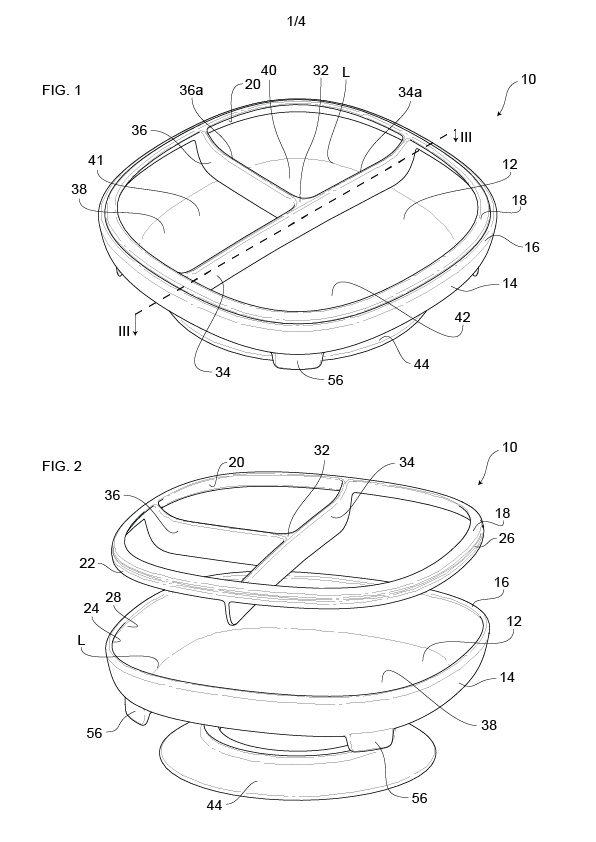
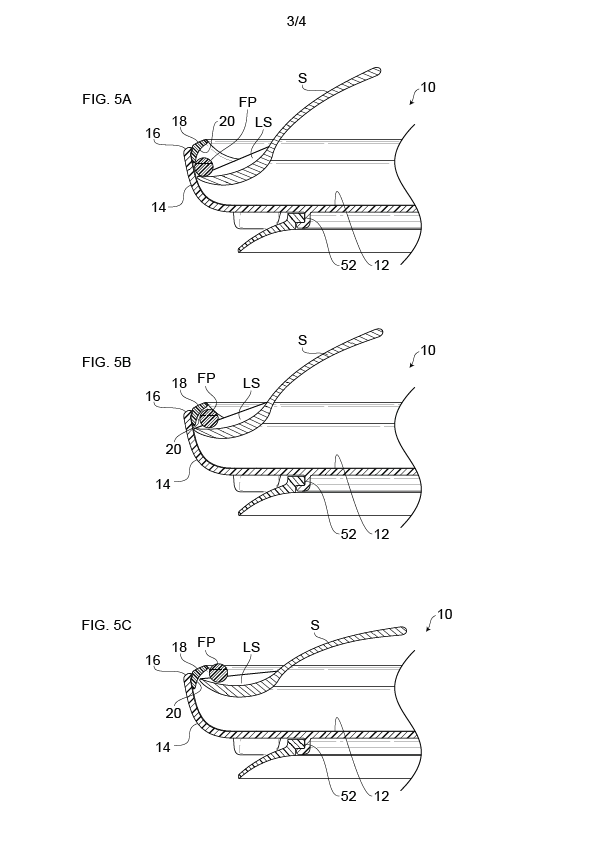
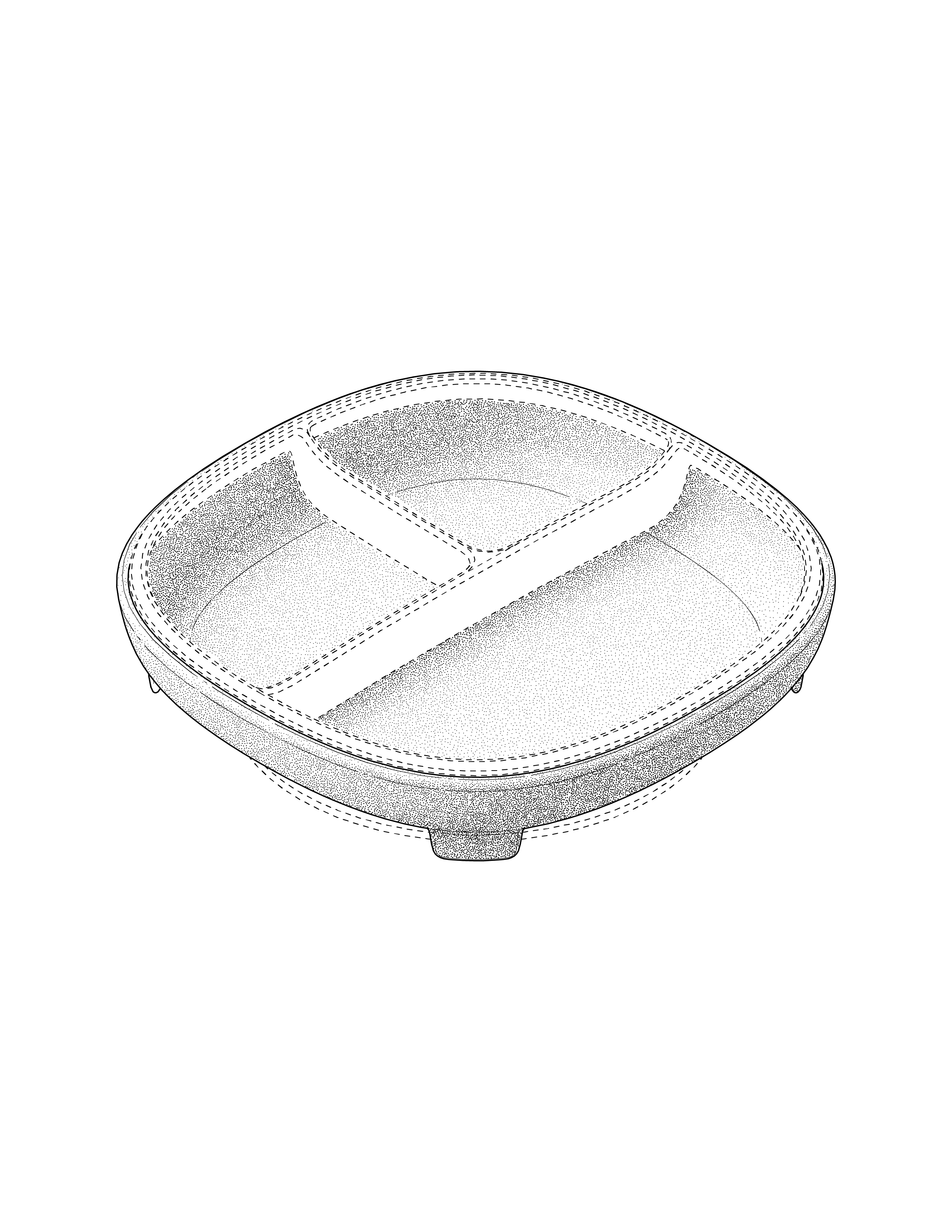
Technical drawings prepared to support design registration and patent documentation.
Launch Visuals
To support the launch, I created still and animated visuals that highlighted the product’s modular system and colour range. These assets were designed for digital marketing and social use, helping communicate the product in a way that felt clear, friendly, and ready for market.
Outcome
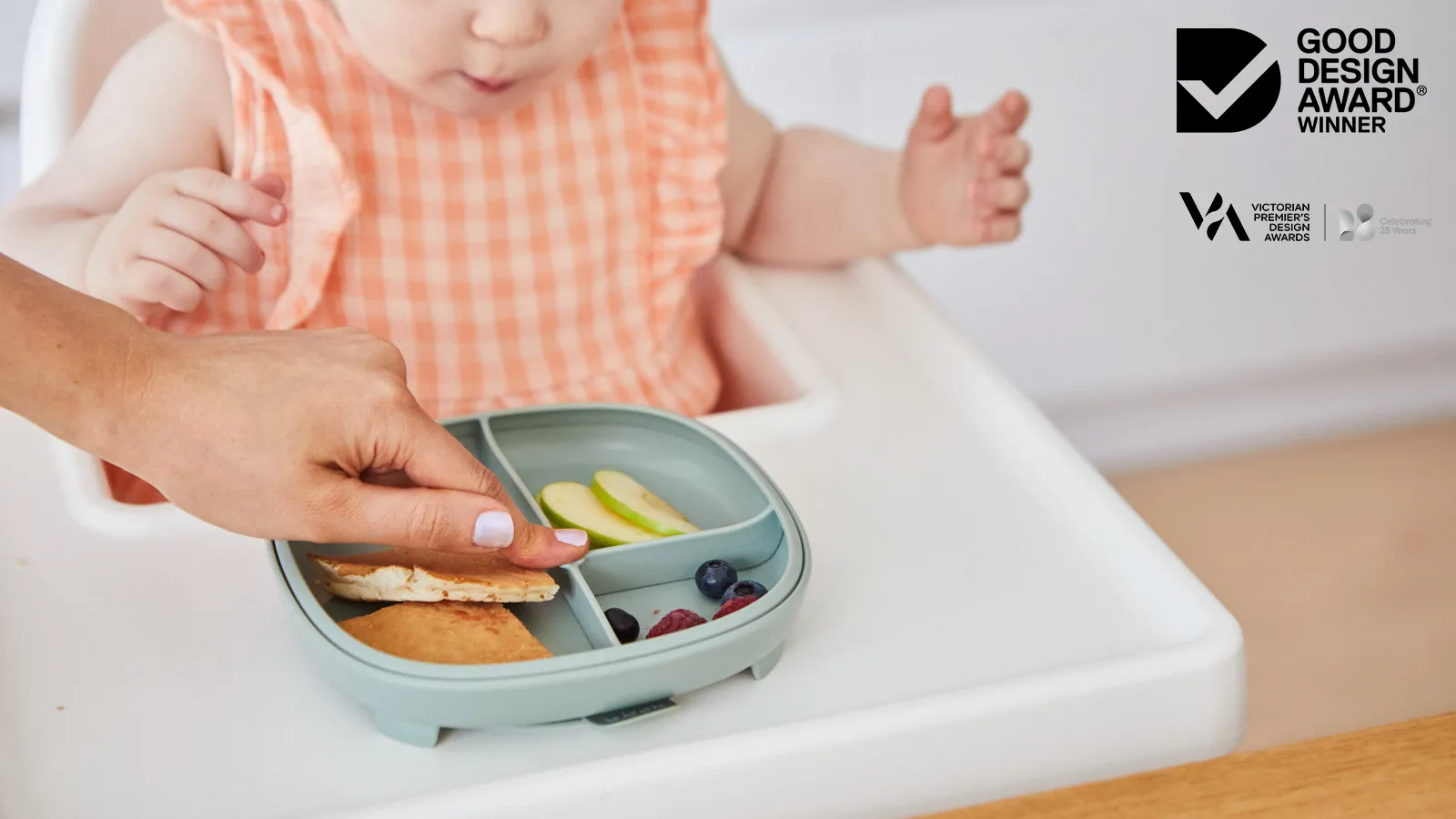
The product launched in 2024 as part of the b.box feeding range and was later recognised with a Good Design Award, as well as named a finalist in the Victorian Premier’s Design Awards. For me, it’s a project that captures the kind of work I enjoy most: taking a simple everyday object and developing it carefully until it becomes more useful, more durable, and more considered from every angle.